×
New on the blog
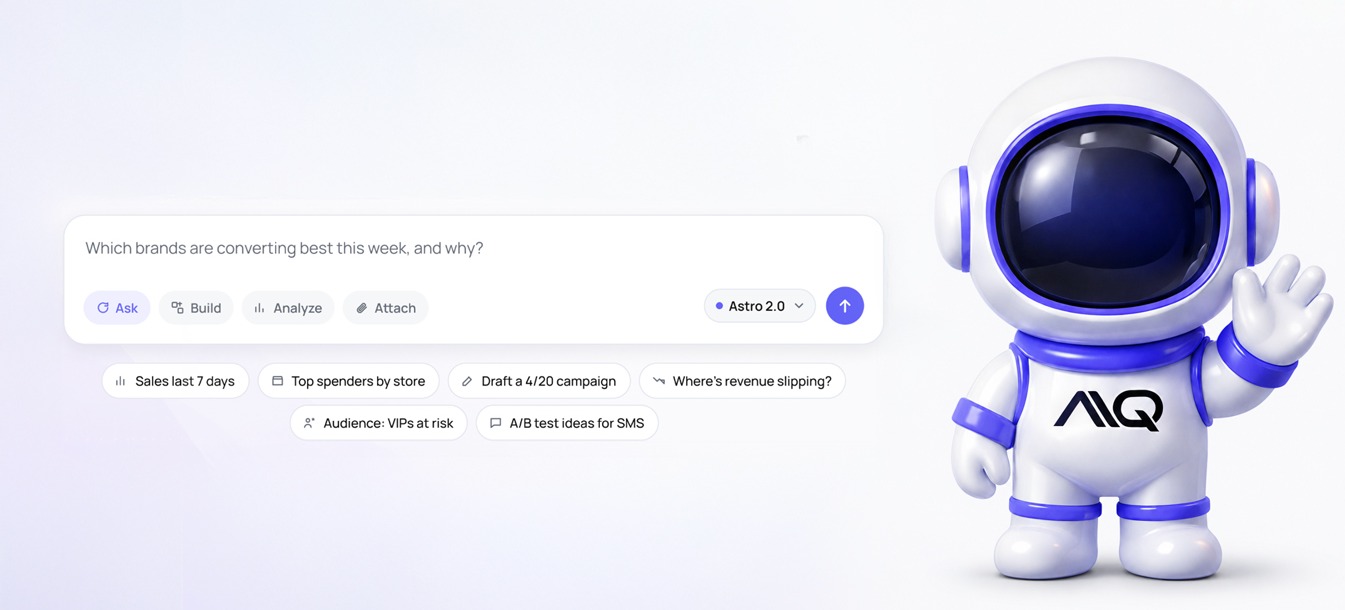
Meet Astro. The AI operating system for AIQ.
"Build me a 20% off campaign for lapsed customers." Astro can have it ready before you finish your coffee. You decide when it sends.
See what Astro can do →New on the blog
"Build me a 20% off campaign for lapsed customers." Astro can have it ready before you finish your coffee. You decide when it sends.
See what Astro can do →
Cannabis shopping is no different.
Today’s menus are full of options, but most shoppers don’t arrive looking for a specific product. They arrive with a feeling in mind. A use case. A question they can’t always articulate. The work of choosing happens right there, before a budtender enters the conversation, and often before a shopper feels confident enough to commit.
This is the moment where cannabis sales either move forward or quietly fall apart.
Valentine’s Day makes the metaphor easy, but the truth is it matters all year: better matches lead to better outcomes. And most menus still aren’t built to make those matches well.
On paper, menus are doing their job. They list inventory, pricing, potency, and categories. From an operational standpoint, they’re organized and complete.
For shoppers, they’re overwhelming.
Filters assume people already know what they want. Recommendation rails add options when what’s needed is fewer, clearer choices. Marketing systems shape demand before the visit, but disappear at the moment of decision, when uncertainty peaks.
The result is familiar: browsing without confidence, clicking without conviction, and decisions that stall or get deferred to staff.
That’s not a merchandising problem. It’s a matching problem.
This is where Terpli, AIQ’s AI Sales Agent, comes in. It works inside the menu to help shoppers figure out what actually makes sense for them, instead of just showing more products. At the end of the day, it’s about helping shoppers answer a simple question: which of these is right for me?
Good matchmakers don’t flood you with options. They listen first.
Inside the menu, Terpli guides discovery by understanding how shoppers browse, what they react to, and what they say they’re looking for. From there, it helps narrow the choices and make the options easier to understand.
That looks like:
When the match is right, the decision feels easier. And easier decisions tend to stick.
That shows up in outcomes. Retailers using Terpli’s AI-powered insights have seen customers who engage with guided experiences convert more often and spend more per visit, with repeat behavior happening faster over time. When you zoom out, shoppers who interact meaningfully with recommendations deliver substantially higher lifetime value than those who browse without guidance.
These are the results people can actually choose with confidence.
None of this replaces the role of staff. In fact, it supports it.
When the menu does a better job of matching shoppers to products, retail teams spend less time untangling confusion and more time adding value. Conversations start from a place of clarity, not guesswork, and digital and in-store experiences feel aligned instead of disconnected.
Because Terpli is part of the broader Alpine IQ ecosystem, it can draw on CRM, loyalty, and segmentation data without needing to be front and center. It simply shows up at the right moment, using context to help shoppers make a decision without overwhelming the experience.
The result is a system where data supports the sale, not the other way around.
The next phase of cannabis retail won’t be defined by bigger promotions or more aggressive automation. It’ll be driven by trust.
Shoppers want help choosing, not pressure to buy. They want to feel seen, not segmented into oblivion. And they want experiences that respect their intent at the moment it matters most.
This Valentine’s Day, the idea of a “perfect match” is more than a theme. It’s a reminder that good sales, digital or in-store, are built on understanding.
Terpli, AIQ’s AI Sales Agent, reflects that shift. As a matchmaker inside the menu. As infrastructure that helps people choose confidently. And as a smarter way to build relationships that last well beyond a single transaction.