×
New on the blog
Meet Astro. The AI operating system for AIQ.
"Build me a 20% off campaign for lapsed customers." Astro can have it ready before you finish your coffee. You decide when it sends.
See what Astro can do →New on the blog
"Build me a 20% off campaign for lapsed customers." Astro can have it ready before you finish your coffee. You decide when it sends.
See what Astro can do →
As 4/20 approaches, every cannabis retailer shifts into planning mode, promotions get mapped out, campaigns ramp up, and traffic begins to surge. That part is predictable. What’s less predictable is what happens after shoppers land on the menu. Because on 4/20, traffic isn’t the constraint
Decision-making is.
4/20 compresses demand into a short window.
You get:
They arrive with intent, but not always with clarity. That gap shows up quickly in behavior: longer browsing sessions, hesitation across product pages, abandoned carts, or defaulting to familiar, low-risk purchases.
Intent brings them in.
Confidence determines whether they buy.
Most 4/20 strategies focus on volume, more campaigns, more impressions, more clicks. Platforms like AIQ Loops and Flows do this well, bringing high-intent shoppers directly into the menu through targeted messaging and triggered journeys. But once the shopper arrives, marketing steps out of the way and the menu takes over. If the experience doesn’t support decision-making, traffic alone won’t convert.
The retailers that perform best don’t treat their menus as static, they treat them as decision environments. Terpli, AIQ’s AI Sales Agent, operates directly within that moment, working inside the menu to interpret behavior and reduce friction using:
All of this happens within the existing ecommerce flow. The goal isn’t to push products, but to help customers understand what fits. That shift, from browsing to guided decision-making, is where performance changes.
On a typical day, improvements in conversion are incremental. On 4/20, they compound, more traffic means more decision moments, and every gain in clarity scales with volume.
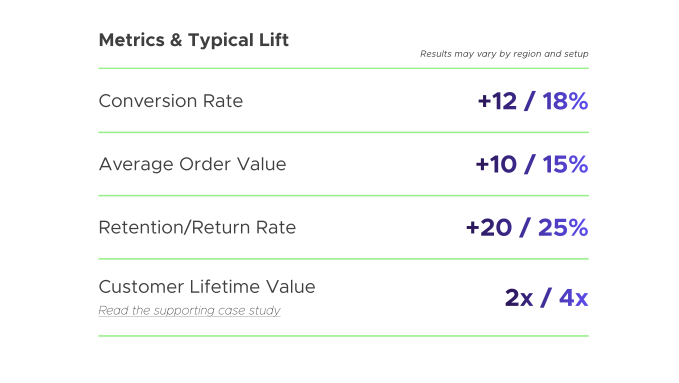
Retailers using Terpli have seen:
These gains don’t come from more promotion.
They come from better decisions.
Most teams treat 4/20 as a spike to capture. The better teams treat it as a starting point. Because when a shopper finds the right product, everything changes, they come back, they trust your menu, and they engage with future campaigns. The value of 4/20 isn’t just the transaction. It’s what happens after. But that only happens if the first decision feels right.
And on 4/20, most menus will look the same: same promotions, same products, same noise. The difference won’t be what you show. It will be how easy you make it to choose. The retailers that stand out are the ones where decisions feel simple, products feel understandable, and purchases feel confident. That’s what customers remember,and what brings them back.
4/20 will bring the traffic, that part is already solved.
What happens next is the difference.
If your menu doesn’t help customers decide, you’re leaving your biggest day of the year up to chance. But if it does, you’re turning intent into conversion—and conversion into long-term value.
That’s the shift.
And it’s happening quietly, inside the menu, right where the decision is made.
Join retailers turning traffic into real growth
Schedule your Terpli demo today >