×
New on the blog
Meet Astro. The AI operating system for AIQ.
"Build me a 20% off campaign for lapsed customers." Astro can have it ready before you finish your coffee. You decide when it sends.
See what Astro can do →New on the blog
"Build me a 20% off campaign for lapsed customers." Astro can have it ready before you finish your coffee. You decide when it sends.
See what Astro can do →
Retail has changed dramatically over the last several years, but most retail technology stacks have not evolved at the same pace.
Today’s customers move seamlessly between ecommerce, in-store shopping, loyalty programs, SMS campaigns, mobile apps, wallet passes, and personalized product discovery experiences without thinking about where one interaction ends and another begins. To the customer, it all feels like one continuous relationship with a brand.
Behind the scenes, however, many retailers are still operating disconnected systems that were never designed to work together cohesively. Marketing platforms operate independently from loyalty programs, ecommerce activity remains separated from customer engagement data, and reporting often exists across multiple dashboards that fail to provide a complete view of the customer journey.
The result is a fragmented retail experience that becomes increasingly difficult to personalize, automate, scale, and measure effectively.
That is why more retailers are shifting toward connected retail infrastructure designed to unify the customer journey instead of managing isolated systems independently. This is the foundation behind how AIQ approaches growth, retention, automation, loyalty, ecommerce, mobile engagement, and AI-powered retail experiences across the broader platform ecosystem.
For years, retail marketing primarily revolved around campaigns. Brands would send promotions, launch discounts, push traffic toward products, and repeat the process again the following week.
While campaigns still matter, modern retail growth increasingly depends on continuity across the customer experience. Today’s consumers expect brands to recognize their preferences, respond to behavior in real time, and create personalized engagement across every touchpoint.
The retailers seeing the strongest retention today are not simply sending more campaigns. They are building connected ecosystems where:
Instead of isolated interactions, retailers are creating customer journeys where every system contributes to a more connected experience.
.gif)
Connected retail is not about adding more technology for the sake of complexity. It is about creating continuity between the systems that already influence the customer experience.
A connected customer journey may begin with a customer signing up through a website popup, mobile app, or in-store QR code. That signup can immediately trigger a personalized welcome Flow introducing the brand, loyalty program, featured products, and mobile experience.

If the customer later browses products online without completing a purchase, that activity can automatically trigger follow-up messaging tied to the products or categories they explored. When they eventually make a purchase in-store, their loyalty profile updates in real time, reward balances sync automatically, and future segmentation becomes more informed by their behavior.
Weeks later, if engagement slows down, automation can re-engage that customer through:
None of these experiences operate independently. The value comes from how each system continuously informs the next interaction.
That is where connected retail infrastructure becomes significantly more valuable than standalone marketing tools.
Many retailers still rely on technology stacks where ecommerce platforms, loyalty systems, customer data, POS systems, and marketing tools all operate independently from one another.
As retailers scale, this fragmentation creates operational friction quickly. Teams often find themselves:
Over time, disconnected infrastructure slows down automation, limits visibility into customer behavior, and makes it significantly harder to create seamless customer experiences.
Connected infrastructure changes that dynamic by creating a centralized ecosystem where customer behavior, transactions, loyalty activity, and engagement data can continuously work together instead of existing in isolation.

Automation has evolved far beyond scheduled campaigns and static customer journeys.
Modern retailers increasingly rely on behavior-driven automation that adapts dynamically to customer activity across ecommerce, loyalty, mobile engagement, and in-store purchases. This is where AIQ Flows becomes particularly valuable within a connected retail ecosystem.
.gif)
Instead of manually building every campaign, retailers can automate engagement around moments like:
The goal is not simply efficiency. It is creating more relevant customer experiences that respond to actual behavior in real time.
As customer expectations continue rising, this ability to create adaptive, behavior-driven engagement is becoming one of the most important advantages modern retailers can build.
.gif)
Artificial intelligence is increasingly influencing how retailers personalize engagement, automate workflows, and create more responsive shopping experiences.
Rather than positioning AI as a standalone feature, AIQ integrates AI-driven functionality throughout the broader customer journey. AI-powered capabilities support:
AIQ’s AI Sales Agent, Terpli, extends this even further by helping retailers create conversational shopping experiences that guide customers toward products more intelligently across digital retail environments.
The goal is not to replace retailer strategy or creativity. It is to help retailers scale personalization more effectively while reducing the operational lift required to maintain highly segmented engagement across the customer lifecycle.

Many loyalty platforms stop at points accumulation and reward redemption. Modern loyalty infrastructure, however, has the potential to influence far more than discounts alone.
When loyalty connects directly into ecommerce, automation, customer data, mobile engagement, and marketing systems, it becomes a behavioral layer across the customer experience.

Customer purchases can influence future segmentation. Loyalty milestones can trigger personalized journeys automatically. VIP tiers can shape offers, messaging, and retention strategies, while reward balances can help drive repeat visits and long-term engagement.
Retailers using loyalty as part of a connected ecosystem often create stronger continuity between customer engagement and customer retention because the program actively informs the broader retail journey instead of operating independently.

Historically, ecommerce platforms primarily focused on transactions and fulfillment. Today, ecommerce behavior has become one of the most valuable sources of customer intelligence available to retailers.
With AIQ Ecommerce, browsing activity, cart behavior, repeat purchase patterns, and product engagement all provide signals that can strengthen:

Retailers operating within connected ecosystems gain significantly deeper visibility into how customers shop and what influences future purchases. Instead of relying solely on promotions to drive revenue, retailers can begin building adaptive customer journeys informed directly by real customer behavior.

Customer attention increasingly lives on mobile devices, which is why mobile engagement continues becoming a larger part of connected retail infrastructure.
Branded native apps, like AIQ’s custom mobile apps, push notifications, wallet passes, and mobile-first loyalty experiences help retailers maintain stronger continuity between purchases while keeping rewards, offers, and customer engagement easily accessible.
Retailers are also beginning to layer location-based engagement into these mobile experiences through tools like wallet pass geofencing. By triggering notifications when customers enter a defined geographic area, retailers can create more timely and context-aware interactions tied directly to physical store behavior. This allows brands to reconnect with customers while they are already nearby and more likely to visit, redeem rewards, browse products, or engage with current promotions.

Rather than requiring customers to repeatedly search for the brand experience, mobile engagement helps retailers remain consistently connected throughout the customer lifecycle.
As connected ecosystems mature, mobile experiences increasingly function as an extension of:
Instead of operating as isolated channels.
.gif)
Traditional advertising often struggles because it exists too far away from actual purchase behavior.
AIQ Loops approaches retail media differently by placing brand experiences directly inside retail-owned shopping environments where customers are already browsing, engaging, and making purchasing decisions.
.gif)
Loops placements can appear across:
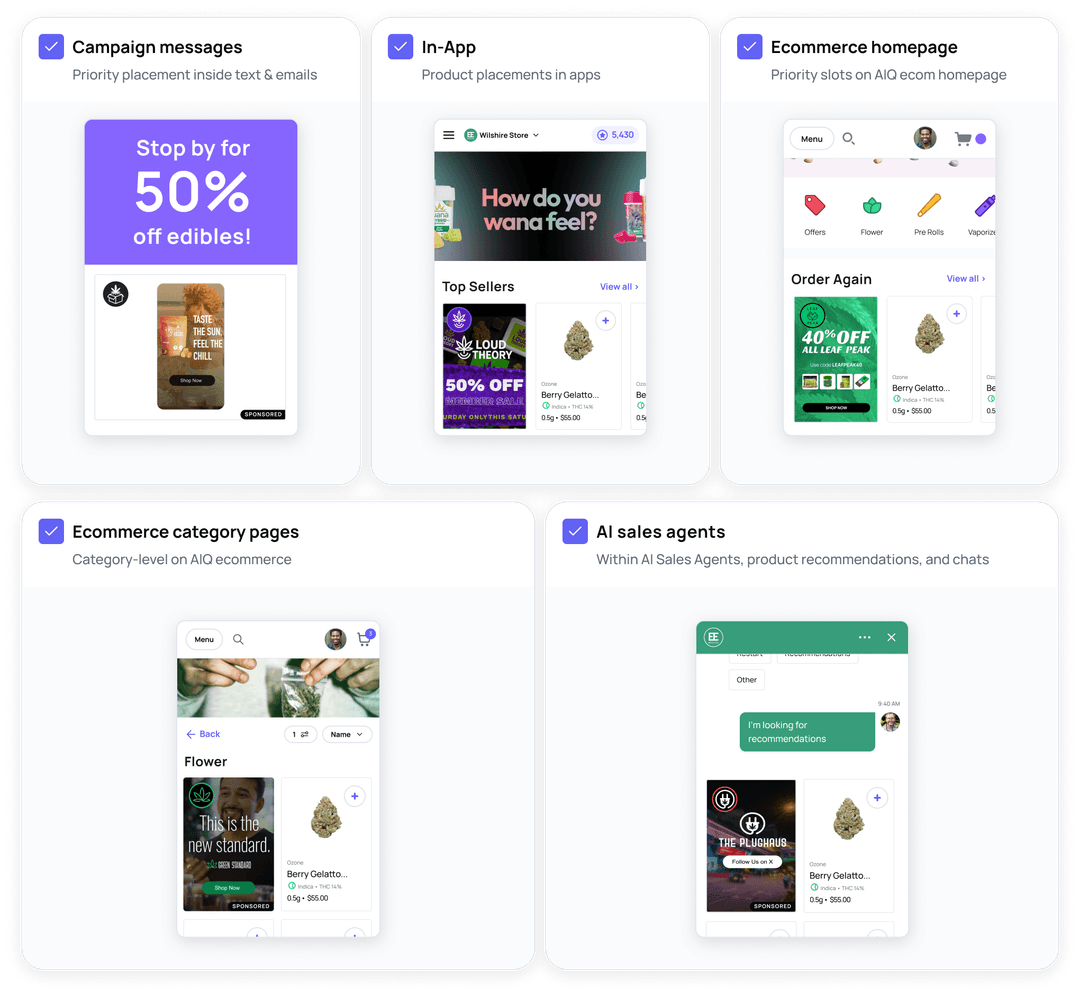
Within a connected ecosystem, this becomes especially powerful because awareness, engagement, and conversion no longer operate independently. Customer interaction data can continuously inform future engagement strategies, creating a much more connected relationship between advertising and retention.

None of these experiences function effectively without connected customer data.
Modern retail personalization depends on accurate customer profiles, real-time behavioral visibility, and infrastructure capable of connecting engagement across multiple channels and systems.
AIQ’s Data Ops infrastructure helps retailers:
Without connected data, automation becomes limited. Without behavioral visibility, personalization becomes inconsistent. Without unified infrastructure, retailers lose the ability to create continuity throughout the customer journey.

Connected customer data is what allows the broader retail ecosystem to operate cohesively.

Retail growth is no longer about simply sending more campaigns or adding more disconnected tools to the technology stack.
The retailers creating stronger customer retention today are building connected ecosystems where loyalty influences engagement, ecommerce informs personalization, automation responds to behavior in real time, AI improves customer experiences, and every interaction contributes to a more complete understanding of the customer journey.
That is the broader shift happening across modern retail.
Connected retail infrastructure designed to help retailers create more intelligent engagement, stronger retention, and more valuable long-term customer relationships across every touchpoint.