
×
New on the blog
Meet Astro. The AI operating system for AIQ.
"Build me a 20% off campaign for lapsed customers." Astro can have it ready before you finish your coffee. You decide when it sends.
See what Astro can do →New on the blog
"Build me a 20% off campaign for lapsed customers." Astro can have it ready before you finish your coffee. You decide when it sends.
See what Astro can do →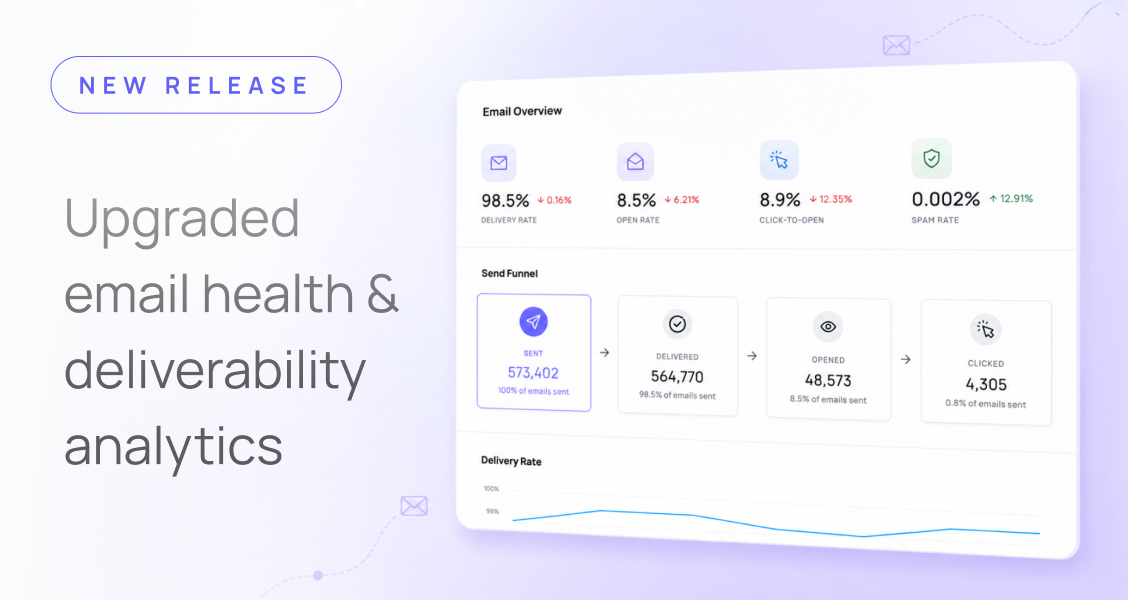
Sending an email is only the beginning. If your messages never reach the inbox, your customers never have the opportunity to engage with your brand.
That's why we're excited to introduce newly upgraded email health & deliverability analytics, a powerful new reporting experience that gives retailers deeper visibility into the health of their email program. With actionable insights into delivery, engagement, mailbox provider performance, and contact quality, you'll have everything you need to improve inbox placement, protect your sender reputation, and maximize the impact of every campaign.
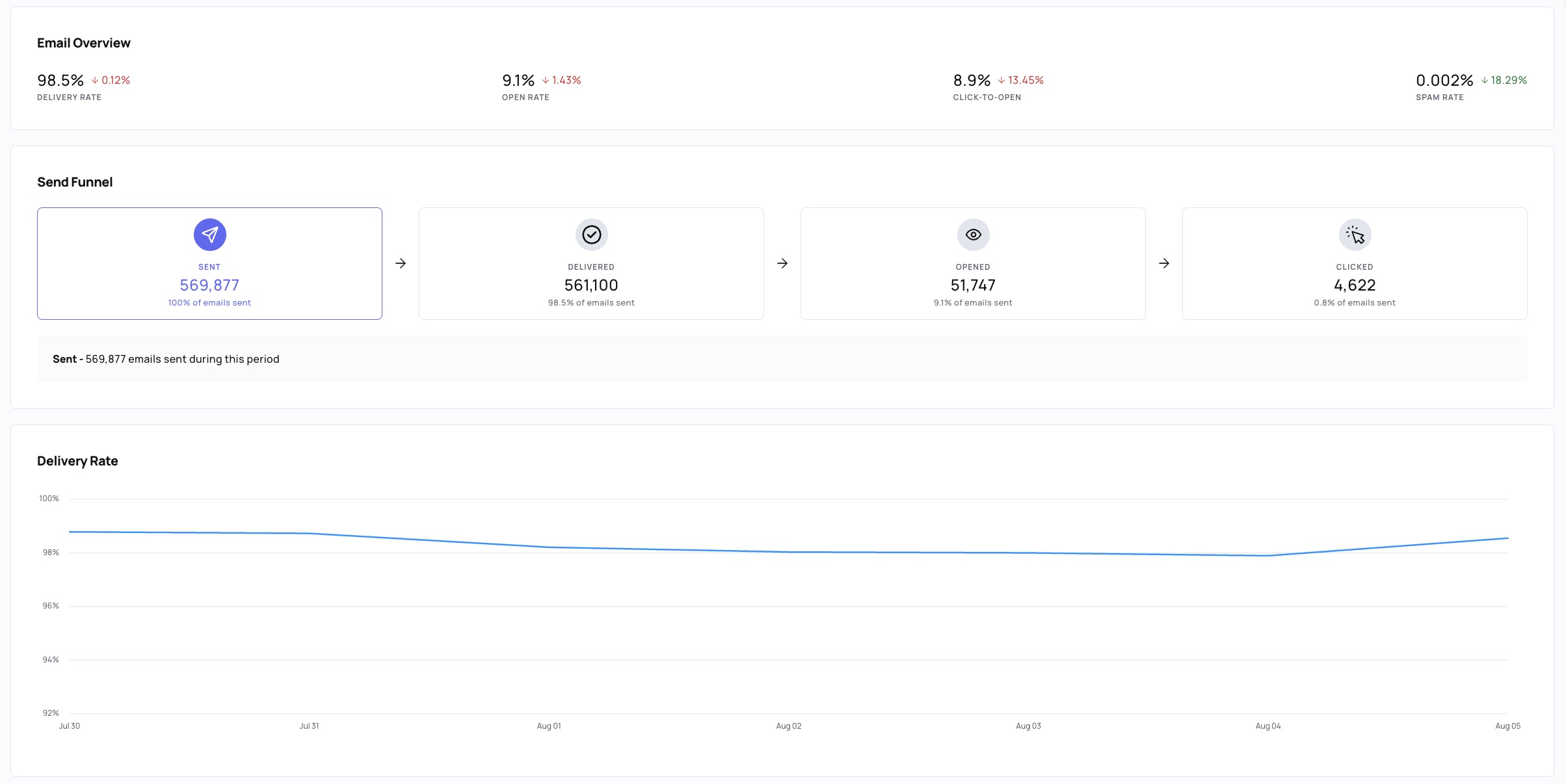
Your new email deliverability dashboard provides an instant snapshot of your email health, making it easy to identify trends, monitor engagement, and uncover opportunities for improvement.
At the top of the dashboard, you'll find four key metrics that help measure the overall health of your email program.
Your delivery rate shows the percentage of emails successfully delivered to recipients' mail servers. While opens and clicks measure engagement, delivery rate answers an even more important question. Did your email make it to the inbox?
Monitoring delivery rate helps identify authentication issues, sender reputation concerns, or list quality problems before they begin impacting campaign performance.
Why it matters: Every delivered email is another opportunity to engage customers, generate revenue, and maximize the return on your marketing efforts.
Your open rate measures the percentage of delivered emails that recipients opened. This metric provides valuable insight into how well your subject lines, sender name, timing, and overall brand recognition encourage customers to engage with your emails.
Why it matters: Understanding what drives opens helps you improve future campaigns, increase engagement, and strengthen customer relationships over time.
Click-to-open rate (CTOR) measures the percentage of opened emails that resulted in at least one click.
Unlike click rate, CTOR focuses specifically on the effectiveness of your email content after someone has opened the message. It provides a clearer picture of how compelling your messaging, design, and calls to action really are.
Why it matters: Learn what motivates customers to take action so you can optimize content, improve conversions, and drive more revenue from every campaign.
Your spam rate tracks the percentage of recipients who marked your emails as spam.
Even low complaint rates can impact sender reputation over time. The dashboard also includes a visual spam health indicator that compares your complaint rate against recommended thresholds, making it easy to understand whether your sender reputation remains healthy.
Why it matters: Keeping spam complaints low helps protect your sender reputation, improve inbox placement, and ensure future campaigns continue reaching customers.
The new send funnel provides a clear visual representation of how every email moves through your marketing funnel.
Sent → Delivered → Opened → Clicked
Instead of reviewing each metric separately, the funnel highlights exactly where recipients stop engaging. Whether performance drops during delivery, opens, or clicks, you'll immediately know where to focus your optimization efforts.
Why it matters: Quickly identify bottlenecks, troubleshoot campaign performance, and make informed improvements that drive better results.
Knowing an email wasn't delivered is helpful. Knowing why it wasn't delivered is even better.
The new failure reasons report categorizes undelivered emails into:
Rather than searching through logs, you can immediately identify the largest contributors to delivery issues and begin resolving them.
Why it matters: Reduce failed sends, improve list hygiene, and increase the number of customers who successfully receive your marketing.
Every mailbox provider evaluates incoming email differently.
The new mailbox provider breakdown lets you compare performance across providers including Gmail, Outlook, Yahoo, Apple Mail, and others.
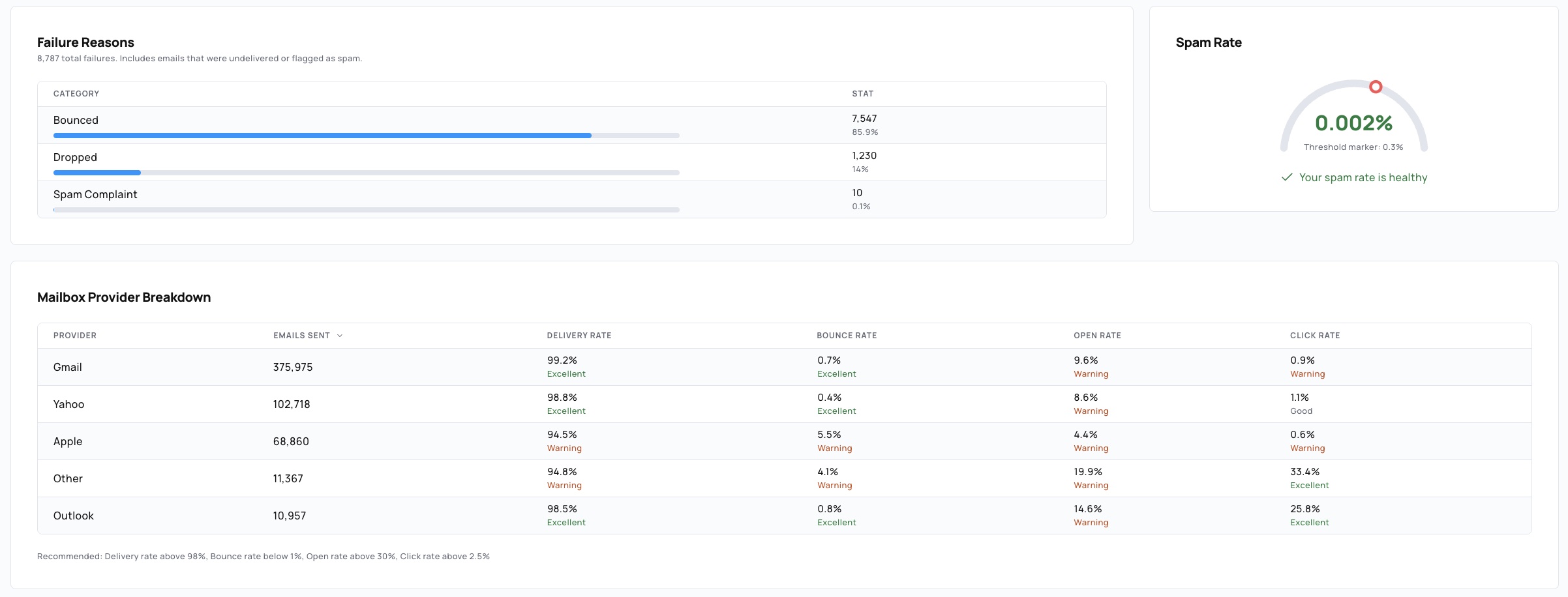
For each provider, you'll see:
Performance indicators make it easy to identify provider-specific issues so you can address problems before they affect future campaigns.
Why it matters: Optimize your email strategy for every major provider and improve deliverability across your entire customer base.
Deliverability changes over time as customer engagement, sender reputation, and list quality evolve.
The new delivery rate trends chart helps you monitor historical performance so you can identify improvements, spot unexpected declines, and measure the impact of optimization efforts.
Why it matters: Catch potential issues early, validate changes you've made, and maintain a healthy email program over the long term.
A strong email program starts with clean customer data.
The new invalid contact information report highlights contacts whose email addresses repeatedly fail delivery, along with the campaigns that generated those failures.
Instead of allowing outdated addresses to quietly impact your performance, you'll know exactly which contacts need attention.
Why it matters: A cleaner contact database reduces bounce rates, protects sender reputation, improves deliverability, and ensures your marketing reaches real customers.
Every campaign represents an opportunity to strengthen customer relationships and generate revenue. That opportunity only exists if your emails reach the inbox.
Email Deliverability Analytics gives retailers the visibility needed to monitor sender health, identify delivery issues before they become larger problems, optimize performance across mailbox providers, and continuously improve campaign results.
These analytics do more than report what happened. They help you understand why it happened and provide the insights needed to improve every campaign you send.
Email Deliverability Analytics is now available under Marketing → Campaigns → Campaign reports → Email Deliverability.
Whether you're sending thousands of emails or millions each month, these new reporting tools make it easier than ever to monitor email health, improve inbox placement, and maximize the performance of every campaign.
Because better visibility leads to better deliverability, and better deliverability leads to better marketing outcomes.