×
New on the blog
Meet Astro. The AI operating system for AIQ.
"Build me a 20% off campaign for lapsed customers." Astro can have it ready before you finish your coffee. You decide when it sends.
See what Astro can do →New on the blog
"Build me a 20% off campaign for lapsed customers." Astro can have it ready before you finish your coffee. You decide when it sends.
See what Astro can do →
Choosing a marketing platform is one of the most consequential decisions a cannabis retailer makes. The right one gives you attribution clarity, reliable deliverability, and marketing that works even when your team isn't. The wrong one locks you into a contract full of gaps you won't discover until they cost you.
Most retailers sign without asking the right questions. Below are the 10 questions worth asking and exactly how AIQ answers each one.
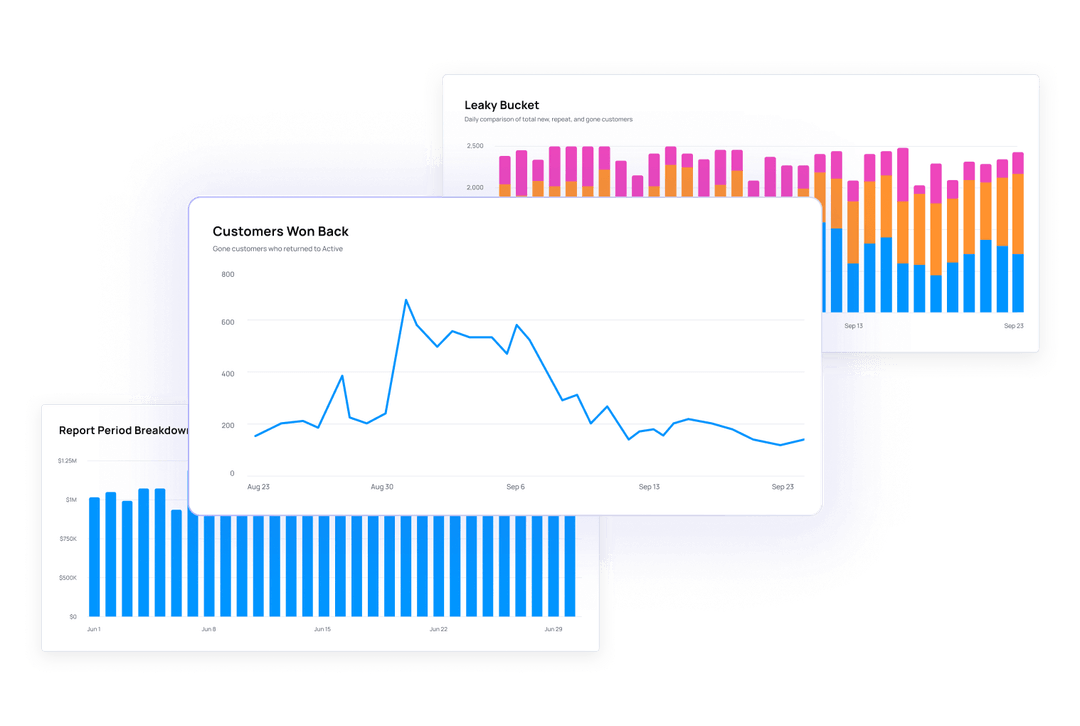
Why it matters: Decision-makers need a unified performance dashboard. If reviewing last quarter's campaigns means pulling separate reports for email, SMS, and loyalty, then manually reconciling them in a spreadsheet, the platform is creating work, not reducing it. You shouldn't need an analyst to tell you which campaigns performed.
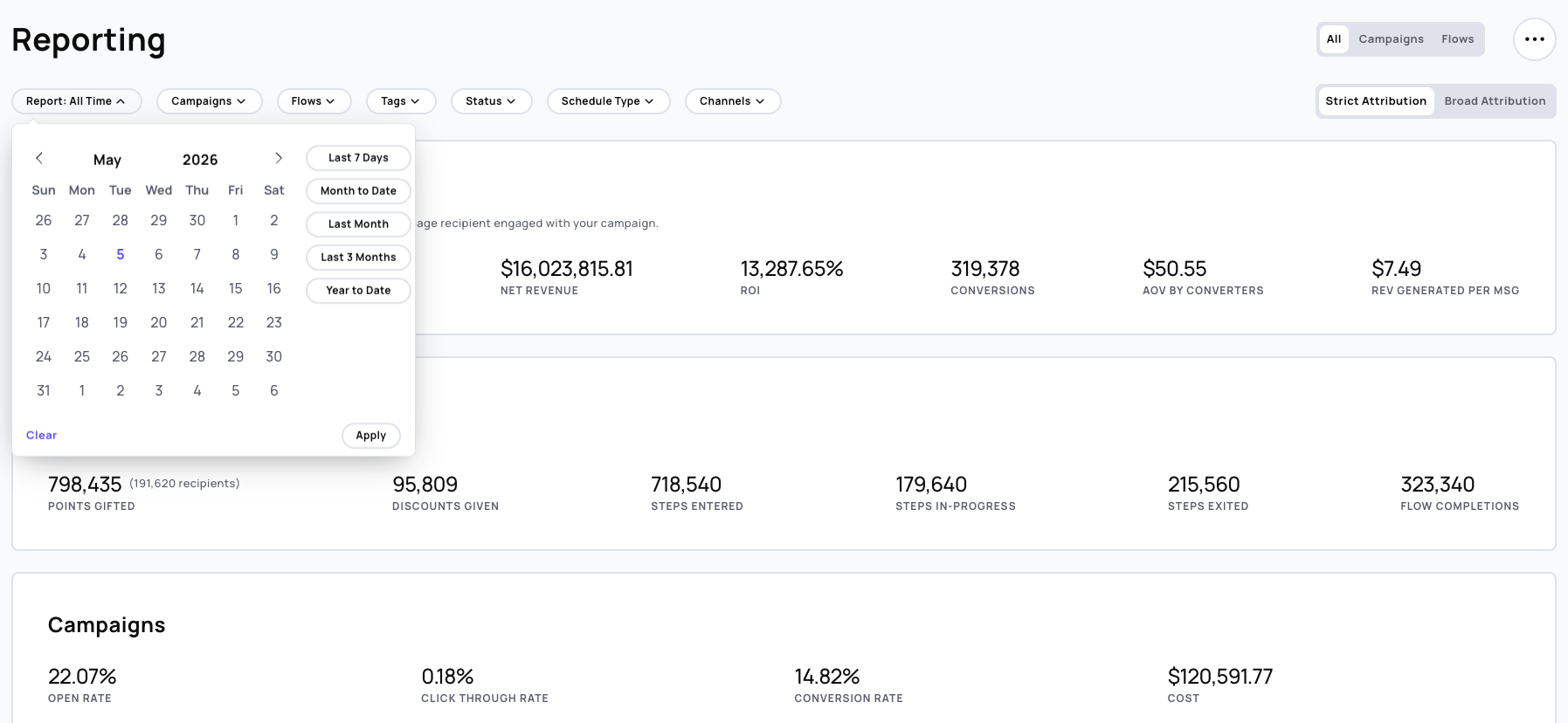
How AIQ solves it: AIQ's campaign reporting dashboard shows every campaign and automated flow in a single view under Marketing > Reporting — email, SMS, push, loyalty, and more. Filter by date range, channel, tag, or campaign status. Key metrics including revenue generated, open rate, conversion rate, and ROI are visible at the campaign level without exporting anything to a spreadsheet. It's a native view, not a custom report, a rep can navigate directly to it in a demo in seconds.
What to look out for: Ask the rep to pull up last month's campaign performance during the demo, all channels, in one view, right now. If they navigate to separate sections for email, SMS, and loyalty, or tell you reporting is available on request, that's your answer. A platform that can't show you a unified campaign view on the spot is a platform where you'll be doing that reconciliation yourself, in a spreadsheet, every time you need to report on marketing performance.
Why it matters: Most platforms set their attribution window at 14 or 30 days by default — and don't let you change it. That sounds generous until you realize what it's actually doing: crediting campaigns for purchases that had nothing to do with them.
Run a weekend flash sale. A customer opens the email on Saturday but doesn't come in. They show up two weeks later for an unrelated reason. Under a 30-day attribution window, that campaign just got credit for that purchase. Your numbers look better. Your decision-making gets worse.
The window should match the campaign. A flash promo has a 48-hour window at most. A loyalty re-engagement campaign might justify 7 days. A platform that locks you into one default window isn't measuring your performance — it's inflating it.
How AIQ solves it: AIQ lets you set attribution windows per campaign — not just a global default. Running a 48-hour flash sale? Set a 48-hour window. Running a campaign to win back lapsed customers? Extend it to 7 or 14 days. The platform doesn't pick a number and apply it universally. You set the window that matches how your customers actually behave, for that specific campaign type. AIQ reps can demonstrate this configuration live in a demo and explain the logic behind different window settings for different campaign structures.
What to look out for: If the rep tells you their attribution window is "14 days" or "30 days" as if that's a selling point, that's a fixed window, not a configurable one. A platform that can't adjust its attribution window isn't measuring your campaigns. It's measuring itself. Any default window will be wrong for some of your campaigns. The question isn't what the default is. It's whether you can change it.
Why it matters: A marketing platform should show you the complete chain — message sent, opened, clicked, store visited, purchased. If any link in that chain requires you to pull data from your POS separately and match it manually, the platform isn't doing attribution. You are.
How AIQ solves it: AIQ closes the loop between the marketing send and the in-store purchase through direct POS integration. The full funnel — Send → Open → Click → Visit → Purchase — is visible inside the platform without any manual cross-referencing. AIQ integrates with major cannabis POS systems including Dutchie, Treez, Flowhub, Cova, and others, pulling transaction data back into the attribution model automatically. Revenue per campaign, revenue per message sent, and full funnel drop-off rates are all reported natively. AIQ clients see an average of $2.44 in revenue per text message sent, a number that's only calculable because the send-to-purchase chain is fully closed within the platform.
What to look out for: "We track sends and opens, purchase data comes from your POS" is not attribution. It's reach measurement. If the platform can't show you the purchase leg of the funnel inside the same interface, you're doing the attribution yourself with a spreadsheet. That's a significant gap, especially if you're trying to prove marketing ROI to an ownership group or board.
Why it matters: Sending mass emails to your entire list, including contacts who haven't opened or clicked in six months, signals to inbox providers that you're sending spam. It damages your domain reputation. And once your reputation drops, your deliverability drops with it, for every send. A list of 50,000 with 20% deliverability is worth less than a list of 15,000 with 95% deliverability.
How AIQ solves it: AIQ's audience builder lets you filter by email engagement directly — including traits like number of messages opened in the last 30, 60, or 90 days. Before sending a campaign, you can build a "cold contacts" exclusion audience using the "Number of opened messages" trait and exclude them from your send. You can also build re-engagement campaigns specifically targeting that cold group with a separate flow. The filtering logic is built into the platform and can be set up once, saved, and reused — so it's not something you have to rebuild from scratch before every campaign. It does require initial setup, but once configured it becomes a repeatable part of your sending process.
What to look out for: "You can filter lists manually before each send" means the platform is putting the responsibility on you. That's a step that gets skipped when the team is stretched. What you want is a platform where engagement-based filtering can be built once, saved, and applied consistently — not something you have to recreate before every campaign. Ask specifically: can I build an exclusion audience for cold contacts, save it, and reuse it across campaigns? Or does this have to be configured from scratch every time?
Why it matters: Your sending domain has a reputation score with inbox providers like Google and Microsoft. That score directly determines whether your emails land in the inbox, the promotions tab, or the spam folder. If no one is actively watching that score, it can decline for weeks before you notice — by which point real damage has been done.
How AIQ solves it: AIQ addresses domain reputation as part of its email best practices guidance. The platform recommends using tools like Google Postmaster to monitor your domain's reputation score and provides specific guidance on what affects it, sending frequency, list hygiene, authentication protocols, and subdomain setup for campaigns. AIQ also helps operators avoid the behaviors that damage reputation in the first place, including bounce management, segmentation best practices, and compliant opt-in flows.
What to look out for: "We follow email best practices" is not an answer — it's a deflection. Any platform worth using should be able to tell you where to check your domain reputation, what you're looking at when you get there, and what to do when the score drops. Ask specifically: Do you provide tools or guidance for monitoring my domain reputation? What should I do if my score declines? A rep who can't walk you through Google Postmaster or explain the difference between a reputation problem and a deliverability symptom probably can't help you fix one. Domain reputation and open rates are related but not the same thing — one is the cause, the other is the symptom. Make sure the platform you're evaluating treats them that way.
Why it matters: Most retailers don't think to ask this question until they see their first invoice. Many platforms route SMS through third-party aggregators rather than managing carrier relationships directly — and that routing comes with per-message fees, typically 3–5¢ per message, layered on top of your platform subscription. At 100,000 messages per month, that's $3,000 in fees that never showed up in the demo. Beyond cost, unregistered sending in regulated industries creates real delivery risk — carriers can filter or block messages from unregistered numbers, which means campaigns that look sent aren't actually landing.
How AIQ solves it: AIQ manages 10DLC carrier registration directly inside the platform — no outside vendors, no separate registration tools. Upon approval, AIQ automatically provisions 49 registered phone numbers tied to your account. For cannabis retailers, 10DLC registration matters beyond compliance: registered accounts cut carrier fees by up to 60% compared to unregistered sending, and businesses already on 10DLC are saving over 20% on carrier fees. For the full cost picture at your actual send volume, ask your AIQ rep to walk through the pricing model in the demo — before you sign.
What to look out for: Ask the rep directly during the demo: Is your account 10DLC registered, or are you sending on unregistered numbers? Are there per-message fees, and what does that look like at my monthly volume? If they can't answer the second question on the spot, or tell you pricing requires a follow-up, that's the answer. The platforms with clean pricing say so immediately. The ones with fees they'd rather you discover post-signature don't.
Why it matters: Most platforms offer loyalty in name only, a points balance and a redemption button. That's not a loyalty program. That's a tab. A real loyalty program drives repeat purchase behavior by making customers feel like members, not just transaction records. The difference shows up in retention, basket size, and how hard it is for a competitor to pull your best customers away.
If loyalty is working for your store right now, members enrolling, points driving repeat visits, engagement multipliers rewarding your best buyers, switching platforms means dismantling that engine and rebuilding it from scratch. Most platforms can't rebuild what you'd be giving up.
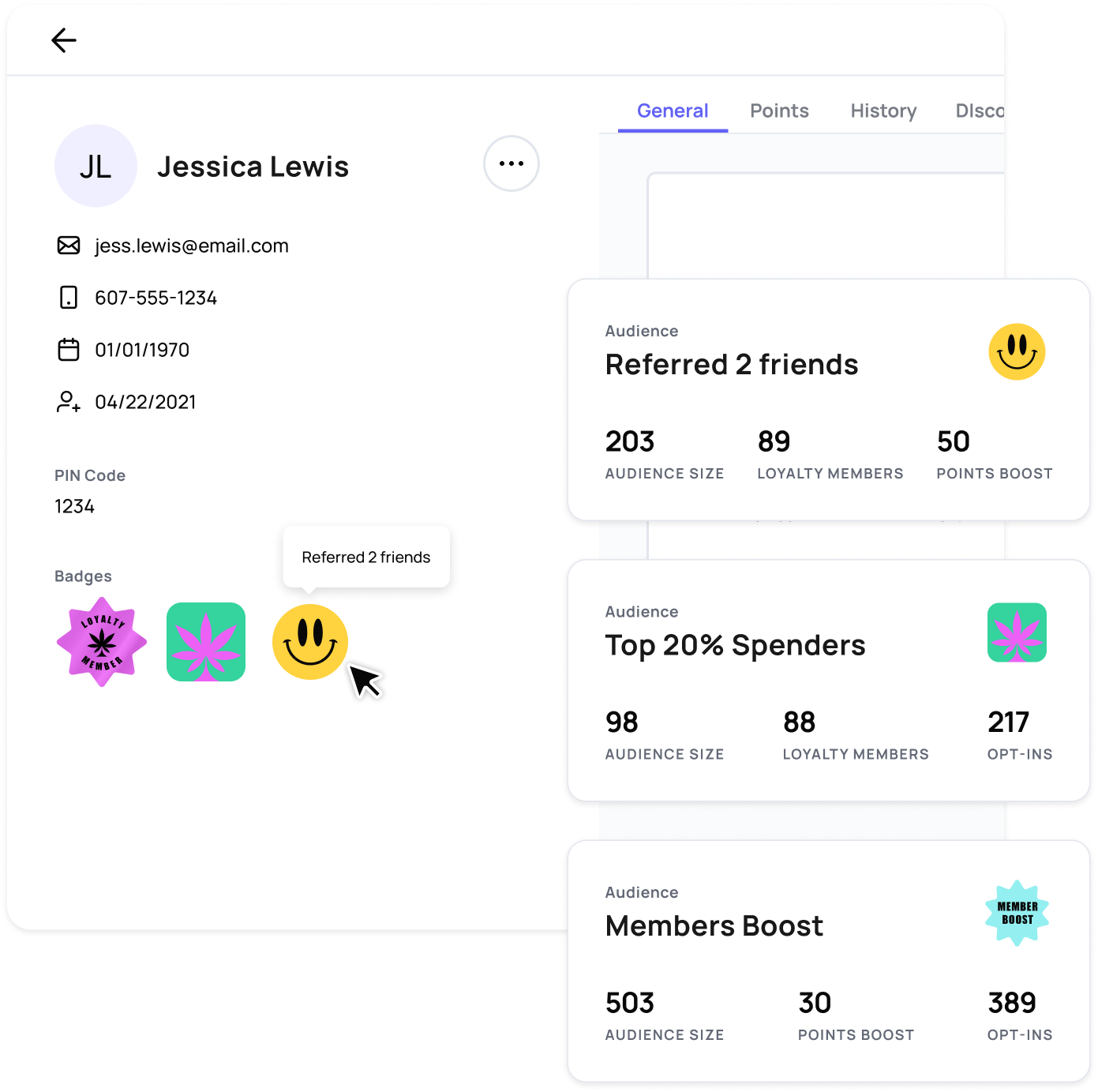
How AIQ solves it: AIQ's loyalty program is built around the idea that every customer touchpoint is an opportunity to deepen the relationship — not just record a transaction. The toolset reflects that:
Retailers can configure milestone rewards that trigger automatically at key moments: first purchase, first loyalty enrollment, birthday, spend milestones, and membership anniversaries. Points multipliers can be applied to specific audiences, brands, categories, or time windows — so a double-points Tuesday on a specific brand is a few clicks to configure, not a manual workaround. Punch-card style loyalty lets you build audiences around purchase count by brand, product, or category — "bought Wyld gummies 5 times" becomes a segment that automatically qualifies for a reward, with no staff involvement required.
The program also supports a two-tier structure — separating customers who joined from those who opted into direct messaging — which gives retailers the ability to reach their most engaged members with unlocked offers and targeted campaigns. Digital wallet passes (Apple and Google Pay) surface point balances, tier status, and brand engagement directly on the customer's phone. AIQ clients see an 85% average increase in loyalty member enrollment on the platform.
What to look out for: Ask the rep to show you gamification in the demo — not just points earn and redeem, but multipliers, milestone triggers, punch-card logic, and how members track their status. If the demo shows a points balance and a discount code, you're looking at a basic rewards tab, not a loyalty engine. Ask specifically: can I set a points multiplier for a specific brand on specific days? Can I trigger a reward automatically when a customer hits a purchase milestone? The answer to both should be yes, and they should be able to show you.
Why it matters: POS systems routinely create duplicate records — the same customer entered twice with a slightly different name, phone number, or email. A marketing platform that imports those duplicates inflates your audience size and distorts your analytics. You may be paying to market to the same person twice while your reported list size looks artificially large. At scale, duplicate records corrupt segmentation, attribution, and spend efficiency.
How AIQ solves it: AIQ applies deduplication logic at the point of POS sync. The platform uses a combination of phone number, email, and identity matching to identify and merge duplicate records before they enter the marketing database. Clients can audit the deduplication output and review merge logic. AIQ has processed over 624 million customer records across its platform — deduplication at that scale requires systematic logic, not manual cleanup. The result is a single clean customer record that reflects actual people, not POS data errors.
What to look out for: "You'd want to clean that up in your POS" or "we import whatever the POS sends us" means the platform is passing the data quality problem back to you. That's not a solution — it's an abdication. Ask specifically: does the platform deduplicate on import, or do I need to maintain list hygiene manually? Clean data is foundational to everything else: segmentation, attribution, deliverability, and spend efficiency all depend on it.
Why it matters: Most dispensaries run marketing in bursts. A promotion goes out, the campaign ends, and then nothing happens until someone builds the next one. Meanwhile customers are abandoning carts, lapsing without a winback message, signing up for loyalty without a welcome series, and hitting purchase milestones with no reward triggered. Every one of those moments is a revenue opportunity that disappears quietly — not because the platform failed, but because nobody was watching.
Manual-only marketing means your results are limited by your team's bandwidth. The best cannabis marketing platforms don't stop working when your team does.
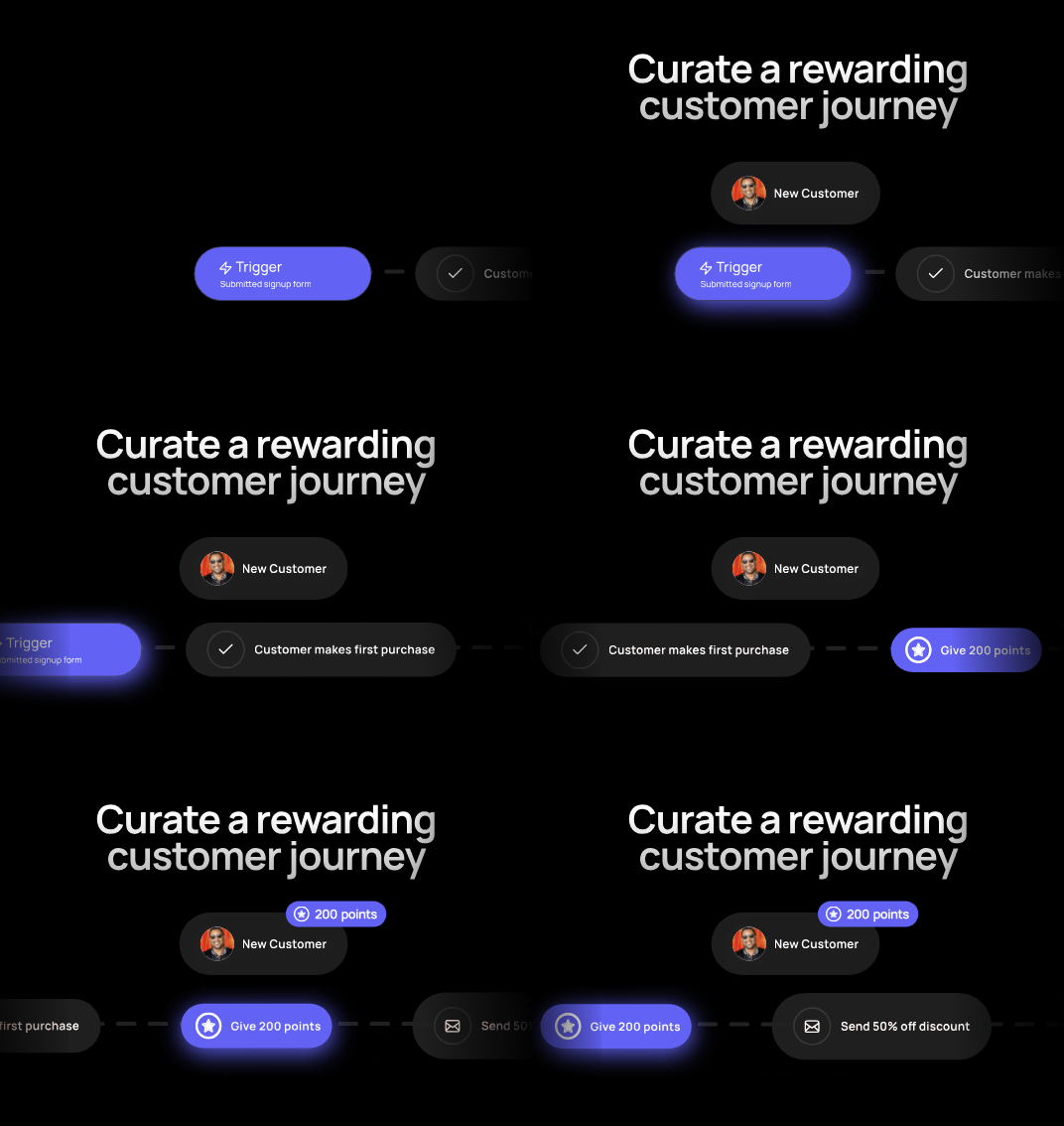
How AIQ solves it: AIQ Flows automate complete customer journeys based on real-time actions — no manual send required once a flow is live. Triggers fire on customer behavior: a signup form submitted, a cart abandoned, a purchase completed, a loyalty milestone reached, a customer going inactive for a defined number of days. From there, the flow executes automatically — sending the right message, through the right channel, at the right time — with delays, conditional splits, and multi-channel routing built in. And it goes beyond messaging: flows can gift loyalty points or apply a discount mid-sequence, meaning a customer who completes a winback journey can be automatically rewarded without anyone touching the platform.
Pre-built Flow templates are available for the highest-value use cases out of the box: Welcome Series, Abandoned Cart, Win-Back, Repeat Purchase, Retention, and Opt-In Messaging. Each can be customized and launched without building from scratch. Flows run continuously until paused — meaning a winback sequence for lapsed customers is running right now, in the background, whether or not anyone on your team is logged in. Attribution is set at the flow level, so performance reporting is clean and tied directly to the automated journey, not manually reconciled.
What to look out for: Ask the rep to show you what happens automatically when a customer abandons a cart, goes inactive for 60 days, or hits a loyalty milestone — without any manual intervention from your team. If the answer is "you'd set up a campaign for that," that's not automation. That's a to-do list.
If they do have automation, go deeper: Is there a limit on how many messages I can send down a single path? Is there a cap on the number of nodes or conditions in a workflow? What's the maximum delay I can set between steps? Can the workflow trigger a loyalty action — gifting points or applying a discount — mid-sequence, or does it only send messages?
These questions matter. A platform that caps you at four messages per path, ten nodes per workflow, and can only send messages without triggering loyalty actions isn't built for sophisticated retention marketing — it's built for simple follow-up sequences. Ask to see a complex flow running live. The depth of what's on screen will tell you everything about how seriously the platform takes automation.
Why it matters: Cannabis marketing runs on tight windows. A campaign that fires incorrectly during a compliance window, a send that fails the night before a major promo, a loyalty integration that goes dark on a busy Saturday — these aren't inconveniences. They have real revenue and compliance consequences. When something breaks, you need to reach a person who can fix it fast, and you need enough platform knowledge to prevent the problem in the first place.
How AIQ solves it: AIQ gives you two layers of support: access to a live team and the resources to become self-sufficient.
On the live support side, AIQ's chat is built directly into the dashboard — no separate portal to log into, no email thread to track down. AI support through Astro, AIQ's trained support agent, runs 24/7. Human support is available Monday through Friday, 9am–7pm Eastern, with ticket submission available outside those hours for anything that needs follow-up. For accounts that need more, AIQ's tiered support model includes dedicated Customer Success Managers, monthly or bi-weekly CSM check-ins depending on tier, quarterly business reviews, and enhanced marketing and product growth support. Every tier, including self-service accounts, includes live chat, technical support, and AIQ Academy access.
AIQ Academy is the self-service layer: structured courses, video walkthroughs, and platform training organized by function. It's designed so your team can get up to speed independently, troubleshoot common issues without opening a ticket, and get the most out of the platform without being dependent on support for routine questions.
What to look out for: Ask the rep two specific questions: Where does support actually happen — is it built into the dashboard or a separate system? And: what training and self-service resources come with my plan? A platform that routes you to an external help portal and offers a knowledge base as its primary support model is telling you something about what happens when you need help at 7pm on a Friday. Live chat in-platform and structured onboarding resources should be standard, not premium add-ons.
The right platform answers every one of these questions with specifics, not roadmap promises, not "we'll follow up," not "let me check with the team." Specifics. In the demo. In writing before you sign.
Watch for a pattern of deflection. Phrases like "that's on our roadmap," "we're working toward that," or "most of our customers don't ask about that" are not answers. They're signals that the capability doesn't exist yet or that the platform is hoping you won't notice the gap until you're locked into a contract.
Any platform worth signing with can answer all 10 of these questions today. AIQ can. And we'll answer them in your demo, with data, not with generic slides.
If you're evaluating platforms right now and want to run this process with us, we're ready.