×
New on the blog
Meet Astro. The AI operating system for AIQ.
"Build me a 20% off campaign for lapsed customers." Astro can have it ready before you finish your coffee. You decide when it sends.
See what Astro can do →New on the blog
"Build me a 20% off campaign for lapsed customers." Astro can have it ready before you finish your coffee. You decide when it sends.
See what Astro can do →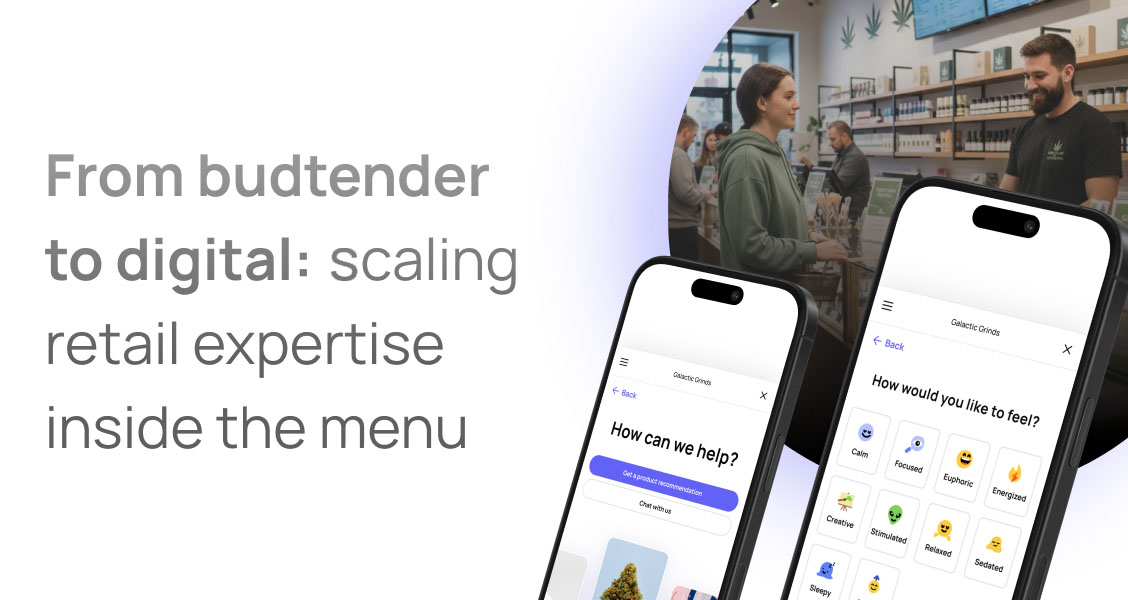
Walk into a well-operated dispensary and you’ll see a familiar pattern.
Some customers know exactly what they want. The brand. The strain. The format. Others approach the counter with a loose idea. Better sleep. Less anxiety. Something social but not overwhelming. They don’t speak in product specs. They speak in outcomes.
And even the brand-loyal shopper needs help when their go-to isn’t available.
A good budtender handles both. They confirm preferences, suggest comparable options, ask a few clarifying questions, and narrow the field. They translate categories and potency into something the customer can feel confident about.
That interaction reduces friction. It builds trust. And it moves the sale forward.
Online, that flexibility often disappears.
Pre-order and pickup have moved more decisions into the menu. In many stores, purchases are now influenced or completed digitally before staff ever engage.
But most menus are built to display inventory, not guide decisions.
Filters assume product literacy. Merchandising assumes intent is fully formed. Promotions assume shoppers know what they’re comparing.
When they don’t, friction shows up fast.
Shoppers scroll. They open multiple product pages. They hesitate. Or they defer the decision to staff at pickup, shifting pressure back to the floor.
The issue isn’t traffic.
It’s translation.
In-store, expertise lives in conversation. Online, it has to live in structure.
If the digital menu is now the sales floor, it needs the same kind of guidance that happens across the counter.
That’s the role Terpli, AIQ’s AI Sales Agent plays.
Not as a chatbot. Not as a pop-up. And not as a stand-in for budtenders.
Terpli works inside the menu as a sales enablement layer, supporting discovery and comparison while intent is still forming.
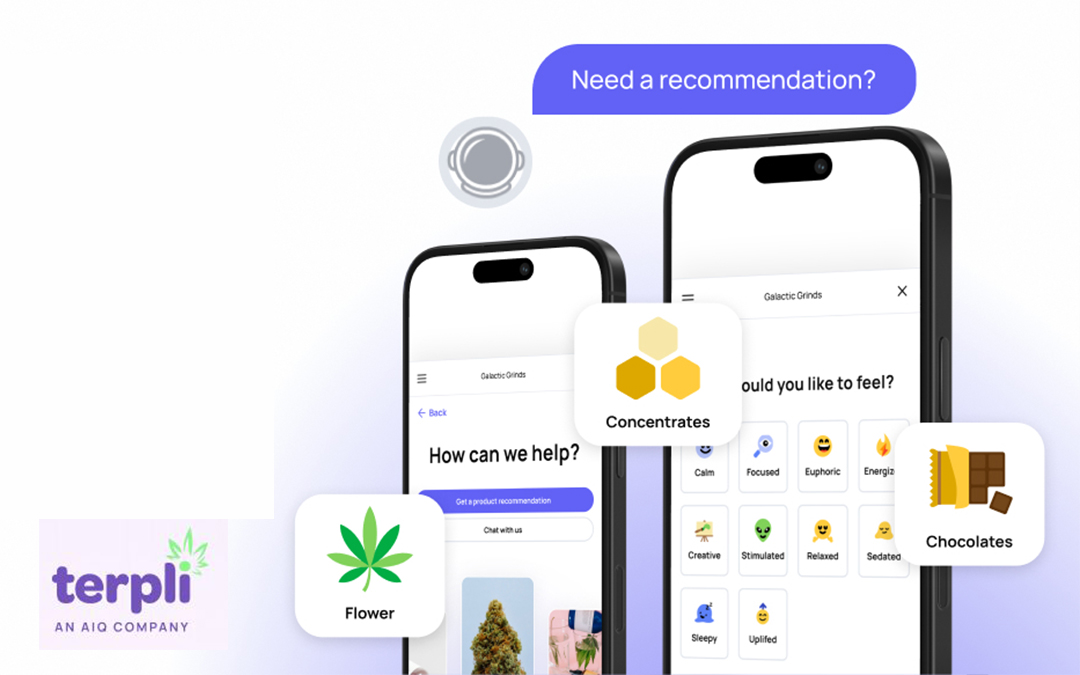
In practice, that means:
Instead of leaving customers alone with hundreds of SKUs, the menu begins to feel structured, responsive, and easier to navigate.
The goal isn’t more automation.
It’s clarity, delivered at scale.
When the primary decision happens before pickup, the digital experience becomes the sales floor.
If the menu is confusing, staff spend time recovering basic questions. If it’s clear, staff can focus on higher-value conversations.
That shift impacts performance.
In one retailer deployment, shoppers who engaged with Terpli saw a 35% higher average order value compared to traditional browsing. Retailers using AI-driven guidance at the menu level have also reported conversion rate increases of 20% or more.
When uncertainty decreases, measurable outcomes improve.
Retail teams are balancing margin targets, inventory priorities, and customer expectations every day.
Terpli doesn’t override that. It supports it.
By grounding guidance in customer goals rather than static merchandising rules, operators can create more consistent experiences across locations. Staff spend less time clarifying basics and more time building relationships.
Consistency builds trust. Trust builds long-term value.
Focused within a connected system
Terpli works best as part of AIQ’s connected infrastructure, but it stays focused on its role.
CRM and loyalty capture history. Loops routes discovery directly into the menu. Terpli supports the decision itself.
Each system has a defined function.
Together, they create a seamless experience instead of one that feels disconnected.
Cannabis retail isn’t traditional ecommerce. Product literacy varies. Regulations constrain messaging. Customer goals are outcome-driven.
In that environment, showing more products doesn’t solve friction. Reducing uncertainty does.
Scaling retail expertise digitally isn’t about scripts. It’s about building infrastructure that mirrors how great budtenders work: ask, narrow, guide.
As more decisions shift online, the retailers who treat their menu as a guided sales environment, not just a catalog, will see the difference.
Not just in conversion.
In confidence.
And confidence compounds.