×
New on the blog
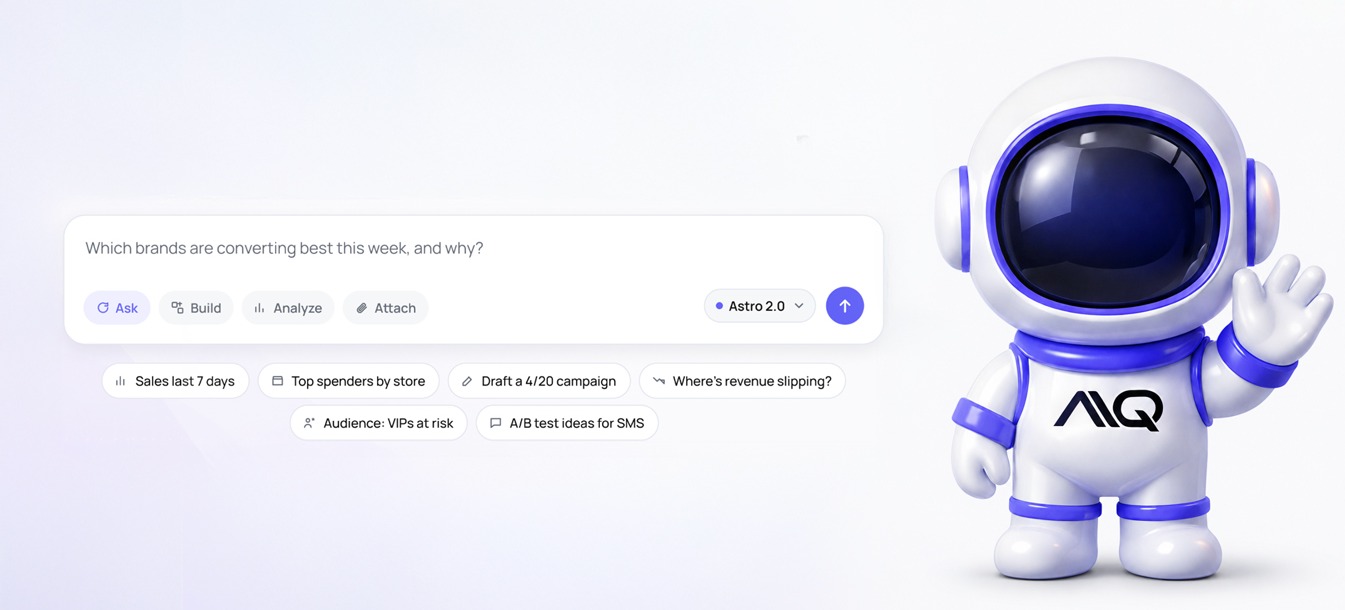
Meet Astro. The AI operating system for AIQ.
"Build me a 20% off campaign for lapsed customers." Astro can have it ready before you finish your coffee. You decide when it sends.
See what Astro can do →New on the blog
"Build me a 20% off campaign for lapsed customers." Astro can have it ready before you finish your coffee. You decide when it sends.
See what Astro can do →
Most loyalty marketing runs on purchase history. The retailers pulling the biggest returns are layering in how customers actually behave and segmenting on it.
Transaction records are the backbone of almost every loyalty program. They show what someone bought and when they bought it, which is enough to power reorder reminders and a steady cadence of promos.
What a transaction does not capture is the shape of the relationship around it. How often someone comes in, whether their visits are speeding up or slowing down, which categories they drift toward, how they respond when you reach out. Purchase history captures the moment of sale and leaves most of the customer out of frame.
Behavioral and lifecycle data is what turns a buyer into a profile you can act on. Visit frequency and the gaps between visits tell you who is a regular and who is drifting away. Lifecycle stage tells you whether you are talking to a first-timer, an established regular, someone going quiet, or a customer you recently won back. Product affinity shows what a person actually reaches for, and channel responsiveness shows where they pay attention.
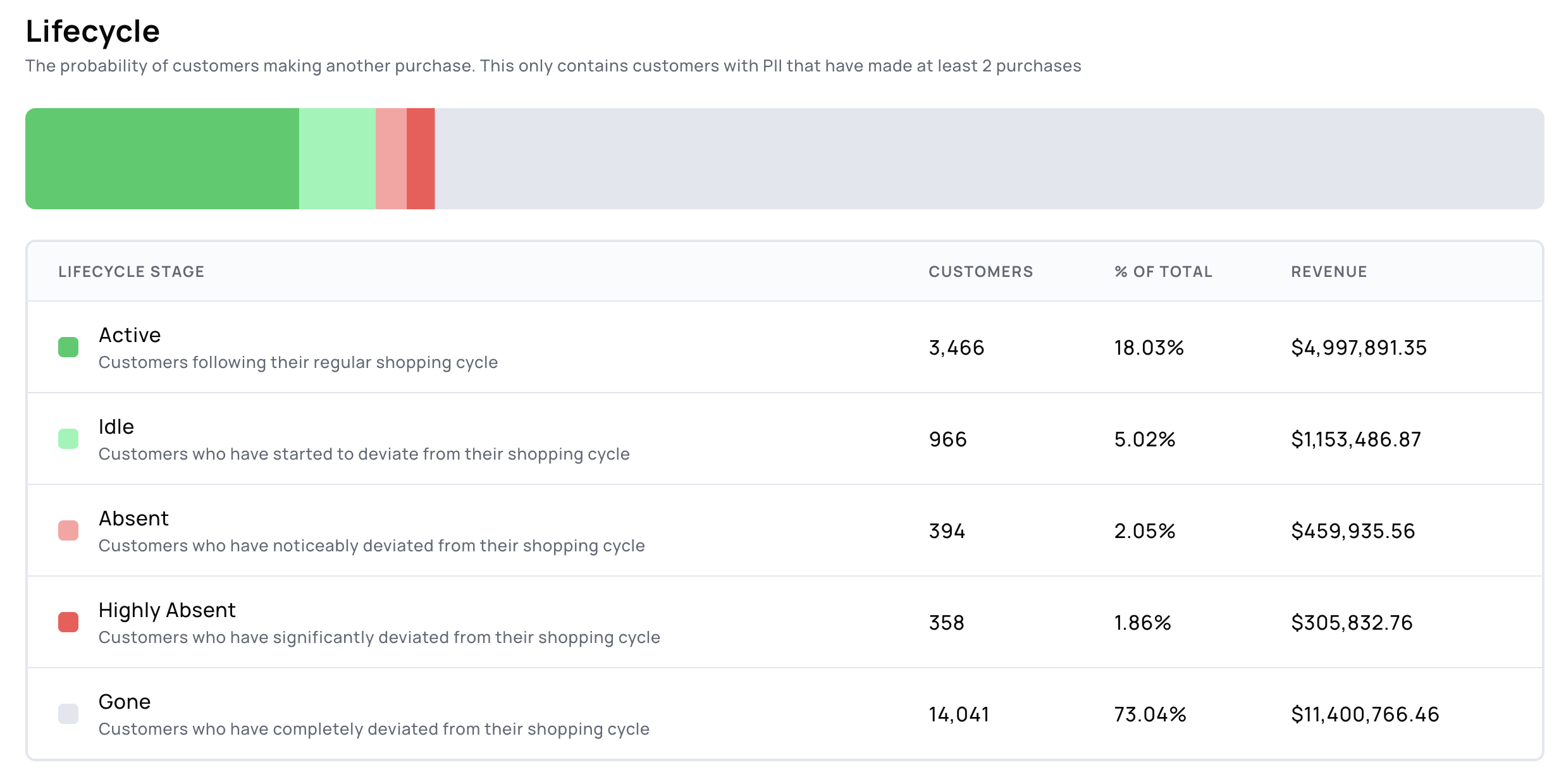
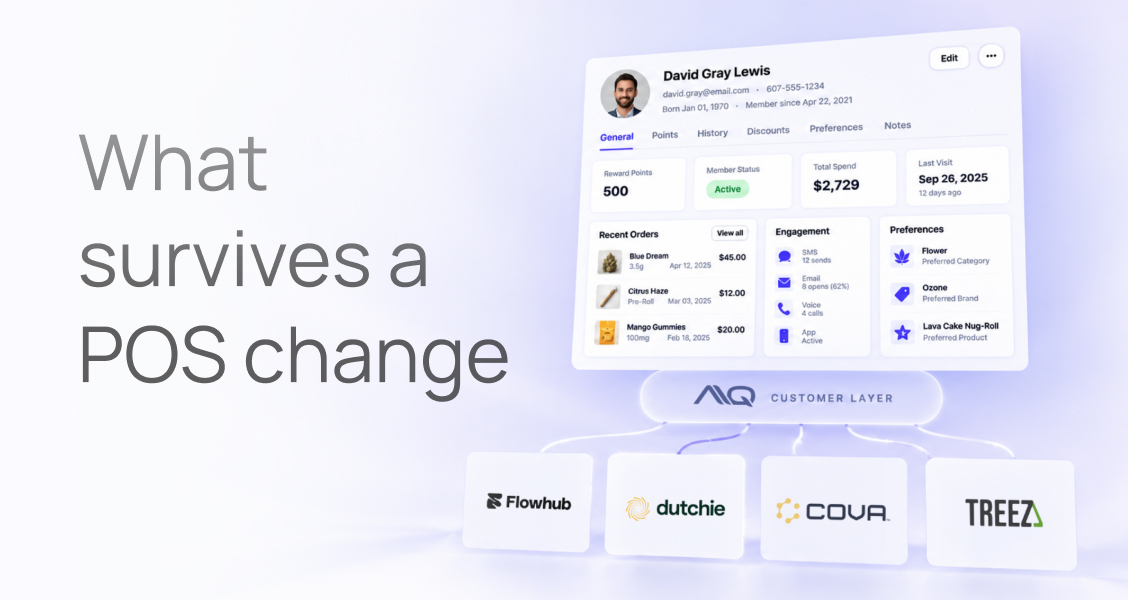
AIQ assembles those signals from across your stack. With 86 plus integrations and open APIs, the customer profile draws on ecommerce activity, loyalty engagement, and message response alongside in-store purchases, so the segmentation has something rich to work with.
Once those signals exist, you can build audiences that match real situations. A win-back for regulars who have slipped past their usual cadence. A VIP track for your highest-LTV members. A first-timer journey built to earn the second visit. A category nudge for someone who only ever buys flower and has never tried edibles.
Each one reaches a different group with a different message, instead of a single promo going out to your whole list.
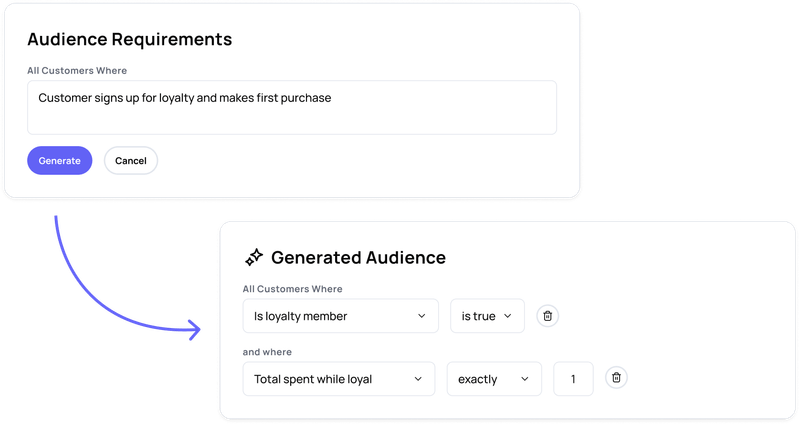
This is the mechanism behind loyalty economics that actually move. AIQ loyalty members carry roughly 3.6 times the lifetime value of non-members and account for more than half of revenue at retailers running their programs well. Audience segmentation is how you get there, since the value comes from reaching the right member with an offer that fits where they are.
Depth only helps if you can see what it returns. AIQ reports at the level you need to make calls, showing delivery and open performance for a send and tying it to the revenue the campaign drove. Many operators use $2.44 in attributed revenue per text as a benchmark to check their own numbers against. When you can see what a given segment produced, you can put budget behind the journeys that earn and retire the ones that do not.
This builds on your transaction data rather than replacing it. The simplest first move is to take one campaign you already run to your whole list and split it by lifecycle stage, then compare what each version brings back. The gap between a single blast and a few well-aimed segments tends to show up fast, and it is usually larger than operators expect.