×
New on the blog
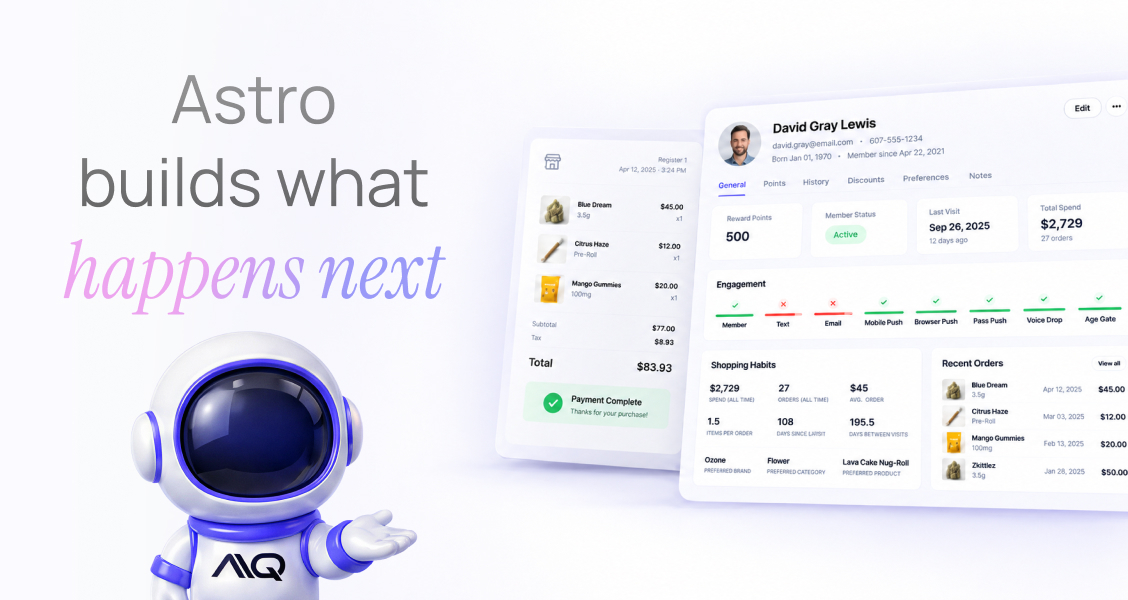
Meet Astro. The AI operating system for AIQ.
"Build me a 20% off campaign for lapsed customers." Astro can have it ready before you finish your coffee. You decide when it sends.
See what Astro can do →New on the blog
"Build me a 20% off campaign for lapsed customers." Astro can have it ready before you finish your coffee. You decide when it sends.
See what Astro can do →
Most of the time, the number you get quoted and the number you're actually paying six months later aren't the same. When operators tell me they regret a platform decision, it's rarely the demo or the feature set that let them down. The trouble is usually buried in the proposal, in some line that read one way during the sales process and meant something else by the time switching had become a real project.
So we put together a decoder for the language you'll run into while shopping for a loyalty and marketing platform. For each phrase, here's what it usually turns into once the contract is signed, and what to ask before you get there. This isn't aimed at any one company. These patterns show up across enough quotes that they're worth recognizing early.
In a lot of cases this is per-message billing with a nicer label on it. The first thing to get in writing is the per-text rate. At three to five cents a message, a shop sending 100,000 texts a month is paying somewhere between $3,000 and $5,000 for messaging alone, and that's before the word "unlimited" enters the conversation. Take your last 90 days of volume and run it against whatever rate they quote, so you're working from your own numbers.
The rate is only part of the story, though. What you really want to know is what each of those messages earns back. On AIQ the average text drives $2.44 in attributed revenue, which means a few cents per send reads very differently depending on what the platform does with it. Push on both numbers when you're comparing, not only the one that shows up on the invoice.
This one seems reasonable on paper, and then you grow. Per-location pricing adds to the bill at the same rate for every new door, so something that felt manageable at five stores can become a number you're scrutinizing at twenty. The thing that grows with you is the cost. Ask how the per-location rate changes as you add stores, and whether it caps out anywhere. For an operator with expansion plans, that detail matters a lot more than the starting figure.
A low opening number is the easiest thing in the world to put on a quote, and it's just as easy to walk back later. Operators describe signing at one price and seeing it move up around the five or six month mark, usually once they're settled in enough that leaving would be a headache. Get the year-two rate in writing before you sign year one. If a vendor believes in what they're charging, putting the renewal number on paper shouldn't be a problem.
Bundle pricing always looks good when you're taking the whole package. The test is what happens to the price of the one product you actually wanted if you turn down the rest. A discount that only exists because you agreed to move everything over is a switching cost, even if nobody calls it that. Some operators describe getting leaned on to go all-in, with the price of the core product drifting up when they hold out. Keep each component priced on its own through the conversation so you can see what you're paying for individually.
A demo shows you the polished version of everything. Part of what you're watching is live in accounts right now, and part of it is whatever's labeled "coming soon." Plenty of buyers commit because of a feature that turned out to be months away with no real date behind it. For anything that's driving your decision, get specific about timing. Ask whether you can use it in your own account next week, and tie that to a version you can actually log into rather than a release window someone waves at.
Something this tied to your revenue is rarely free without a reason behind it. When a platform hands over the loyalty and marketing layer at no cost, it's usually working as a loss leader for whatever product the business actually runs on. It helps to look at how the loyalty piece was built. There's a real difference between a platform that started with loyalty and one that bolted it on to round out a POS pitch.
You can see the gap in what a serious program produces. On AIQ, loyalty members carry 3.6x the lifetime value of non-members and make up 56% of revenue. A program that produces numbers like that usually isn't something a company is willing to give away to win a different deal.
This one is worth asking about head-on. Find out whether the texting engine is actually theirs or a resold layer running on top of someone else's infrastructure. Every additional hop between you and the carriers is one more spot where a message can get filtered or marked as spam, and in SMS that deliverability is most of what decides whether the program works. Ask who owns the sending infrastructure and what kind of carrier relationships they have. That answer tends to move your open rates more than anything you'll see on the dashboard.
None of this is an argument for paying more. The point is that the sticker price is a small slice of what you're actually committing to. Before you sign, look at the renewal number, what the cost does as you add locations, how the per-message charge stacks up against the revenue each message brings in, and which of the features you saw are usable today.
The platforms worth your money keep making sense well after signing day, when you're the one looking at the bill in month seven. That's a fair bar to hold us to as well.