×
New on the blog
Meet Astro. The AI operating system for AIQ.
"Build me a 20% off campaign for lapsed customers." Astro can have it ready before you finish your coffee. You decide when it sends.
See what Astro can do →New on the blog
"Build me a 20% off campaign for lapsed customers." Astro can have it ready before you finish your coffee. You decide when it sends.
See what Astro can do →
Most cannabis retailers run awareness and conversion as separate operations. AIQ Loops and Terpli, AIQ’s AI Sales Agent, are built on the premise that separating them is where revenue actually disappears.
Cannabis retail marketing has always operated in two separate lanes.
The first lane is awareness. You run promotions, brand placements, and campaigns to get a shopper interested. The second lane is conversion. A shopper lands on your menu, browses, and hopefully buys.
Those two lanes don’t share information. The menu has no idea how a shopper got there or what they saw before they arrived. The campaign has no visibility into what happened after the impression.
In between them is a gap. That gap is where purchase intent tends to drop off.
A shopper sees a brand placement. They’re interested. They click through or navigate to the menu. And then the experience resets completely.
The menu doesn’t know they came from a campaign. It doesn’t know what product caught their attention. It presents the same 200 SKUs it presents to everyone. The shopper, who arrived with a specific direction, is now on their own.
Some will push through. Most won’t. The intent your marketing created doesn’t survive contact with an undifferentiated menu.
This problem is worse in cannabis than in most other retail categories. You can’t retarget across the web. You can’t follow a shopper off-platform and re-engage them. Once they leave the moment of interest, you don’t get a second shot. The environment you control ends at your menu. Which means the menu has to do more work than it currently does.
AIQ Loops is described as a new ad channel, and that’s accurate. Brand-funded placements inside loyalty apps, ecommerce homepages, category pages, and campaign messages. Retailers earn revenue from their existing digital surfaces. Brands reach verified, opted-in shoppers across 4,400+ locations. Engagement runs up to 6x higher than static menu placements.
But the more important detail is the destination.
Every Loops placement routes to a URL. And that URL can be the retailer’s own menu. Not a third-party site. Not a brand’s external domain. The retailer’s environment.
That means the shopper doesn’t leave. The interest the placement created carries directly into the purchase environment. The gap closes.
Terpli, AIQ’s AI Sales Agent, operates at the point of decision. It doesn’t run campaigns or generate awareness. It works inside the menu — asking questions, interpreting what a shopper is looking for, and narrowing the field to the right options.
The results from that guidance are measurable. Average order value up 25%. Return frequency up 30%. Customer lifetime value up 2.5x. Conversion rates up 40%. Those numbers come from one thing: shoppers who arrive at a menu and actually get help instead of being left to scroll.
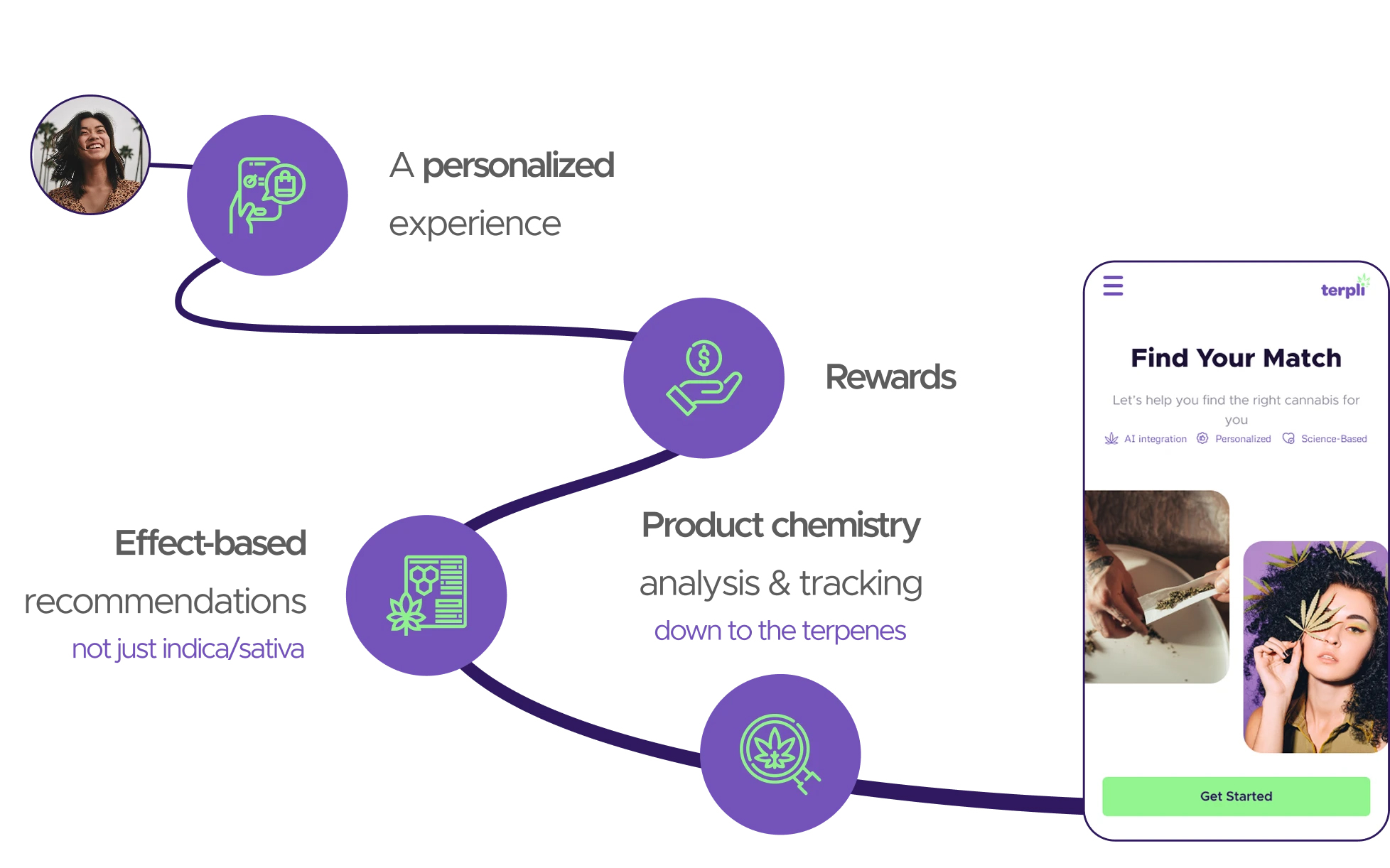
Now connect Terpli to the end of a Loops impression.
A shopper sees a featured product in their loyalty app. They tap the Loops placement. They land on the retailer’s menu, already inside your environment, not redirected somewhere else. Terpli is there. It picks up where the placement left off. It asks what they’re looking for, surfaces relevant options, and moves the conversation toward a purchase.
The interest created by the impression doesn’t reset at the menu. It carries through.
The window between a shopper becoming interested and a shopper making a purchase is short. Every step that creates friction in that window costs you.
A click that sends someone off your platform: friction.
An undifferentiated menu they have to navigate without context: friction.
200 SKUs and no guidance: friction.
The traditional cannabis retail stack treats awareness and conversion as separate problems with separate solutions. The campaigns team runs the impressions. The ecommerce team runs the menu. Neither is accountable for what happens in between.
Loops and Terpli together treat them as the same problem. You can’t optimize one without the other. The impression is only as valuable as the experience it routes to. And the menu is only as effective as the intent the shopper arrives with.
Most cannabis menus are built to display inventory. That made sense when menus were a secondary touchpoint and staff handled the selling.
That’s not how it works anymore. Pre-order and pickup have made the digital menu the primary point of decision for a significant share of purchases. What happens on the menu determines what ends up in the basket.
If you’re investing in brand placements and driving traffic back to a menu that doesn’t guide, you’re spending money to create interest and then squandering it. The menu needs to be ready to receive that traffic and do something with it.
Terpli is what “ready” looks like. Loops is what fills it with high-intent shoppers. The two systems are designed to work in sequence, not in isolation.
A shopper receives a loyalty app message with a brand-sponsored Loops placement. They tap. They arrive at the retailer’s menu. Terpli opens a conversation, not a catalog browse, a guided interaction. The shopper describes what they’re looking for. Terpli surfaces the right options. They complete the purchase.
The retailer earned revenue from the Loop placement. The brand’s spend drove a transaction. The shopper got a better experience than if they’d arrived cold to a static menu. Every part of that path happened inside the retailer’s own environment.
Loops is a revenue channel. That's accurate and worth knowing.
But the bigger shift is structural. For the first time, the impression and the sale live in the same environment. The shopper doesn't leave. The context doesn't reset. Terpli is there when they arrive.
You've been optimizing the parts. This connects them.