
Your team knows your business inside and out.
They know how your loyalty program works. They know what happens when a customer brings back a defective product. They know whether Tuesday's deal stacks with loyalty, which payment methods you accept, and what to tell someone asking about the next pop-up.
The problem is that knowledge lives everywhere.
Some of it is on your website. Some is buried in a document. Some lives in a Slack thread. And some only exists because the person behind the counter has answered the same question a hundred times.
That makes consistency harder as your business grows. Ask the same question at two locations, and you may get two different answers. Change a policy, and the website gets updated while the phone team is still working from last month's information.
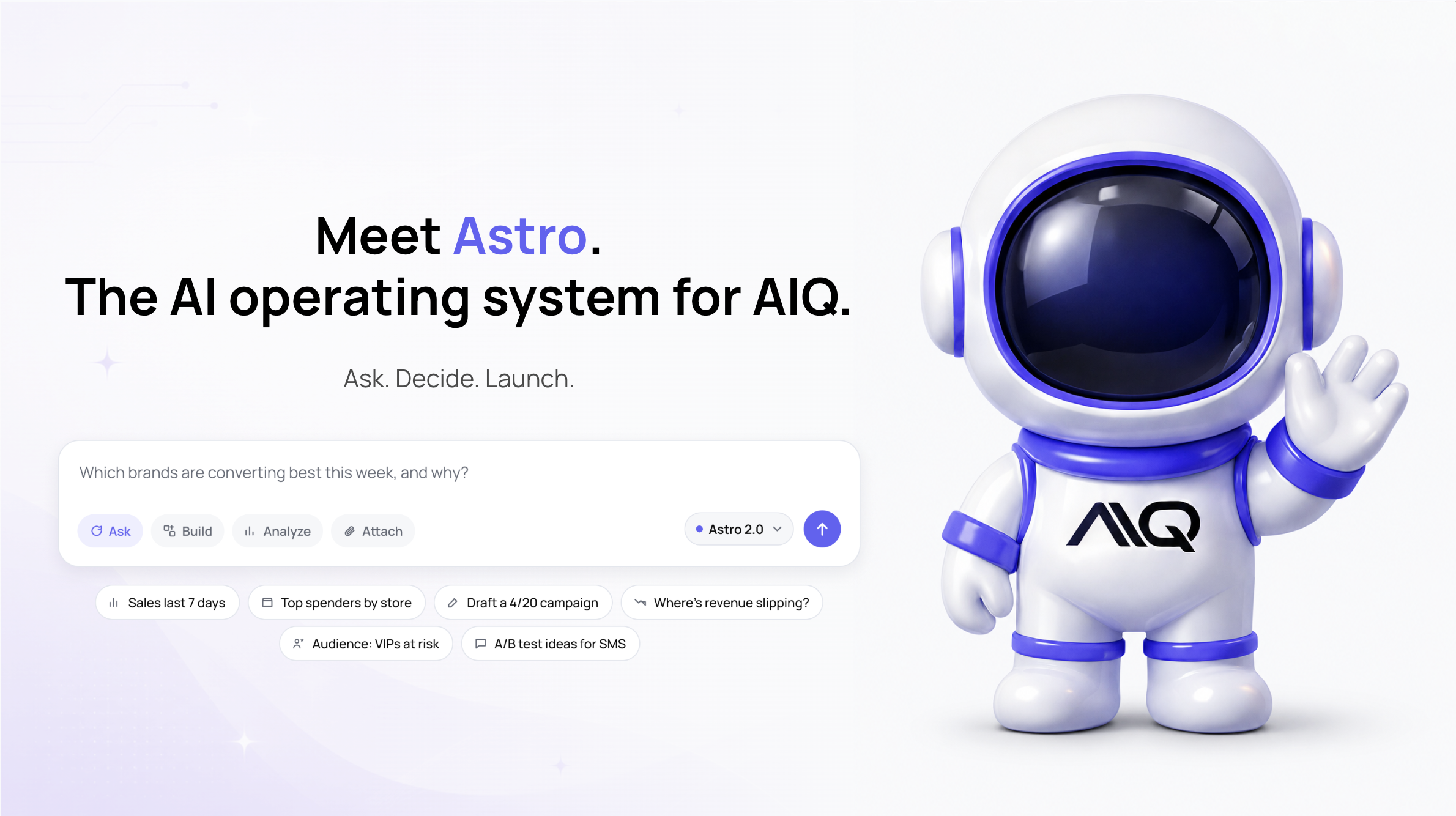
Astro Shared Memory gives all of that knowledge one place to live.
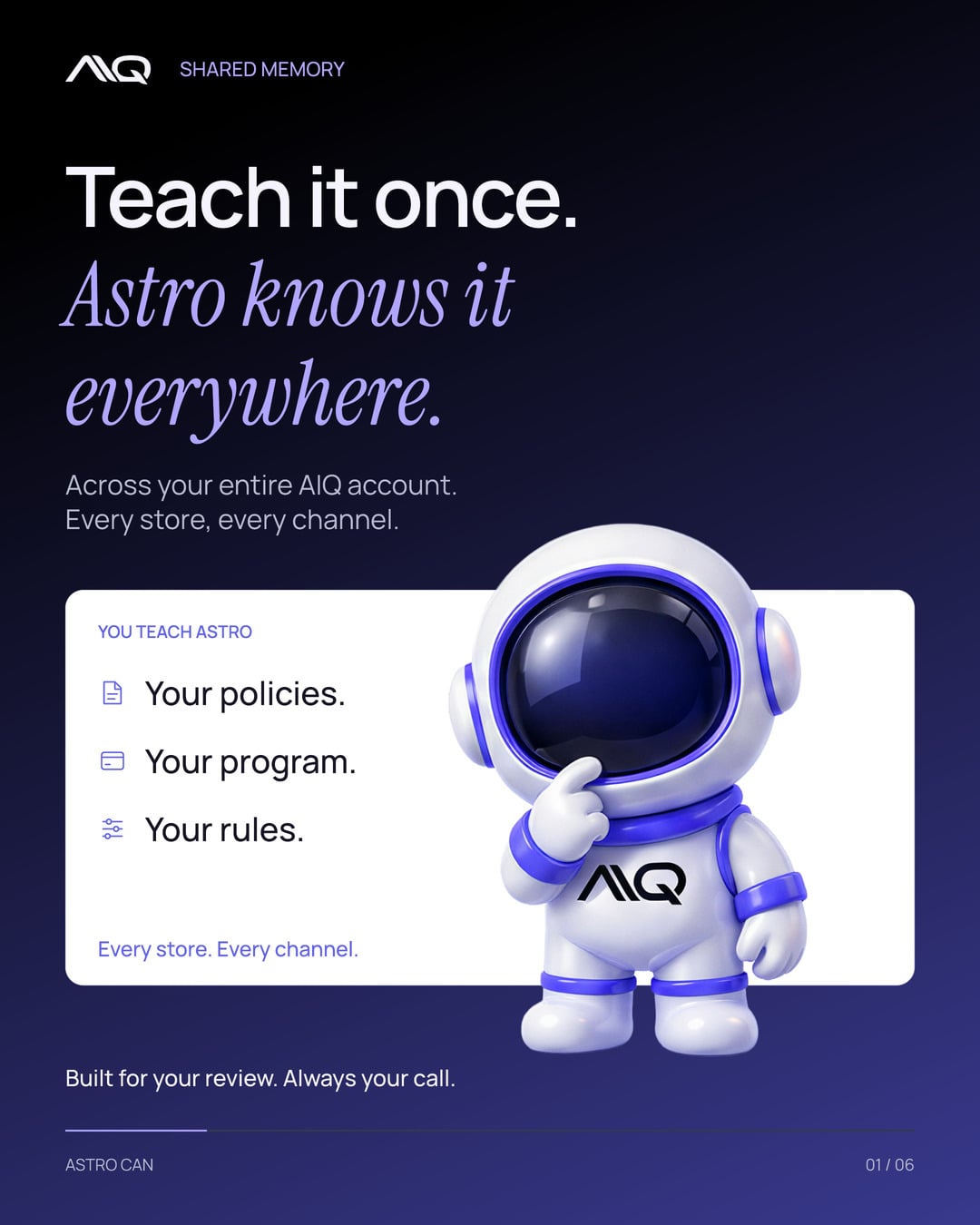
Teach Astro once. Astro knows it everywhere.
Shared Memory is where you teach Astro about your business.
Upload the information your team already uses. Add the answers that have never been formally documented. Define how Astro should respond when certain situations come up.
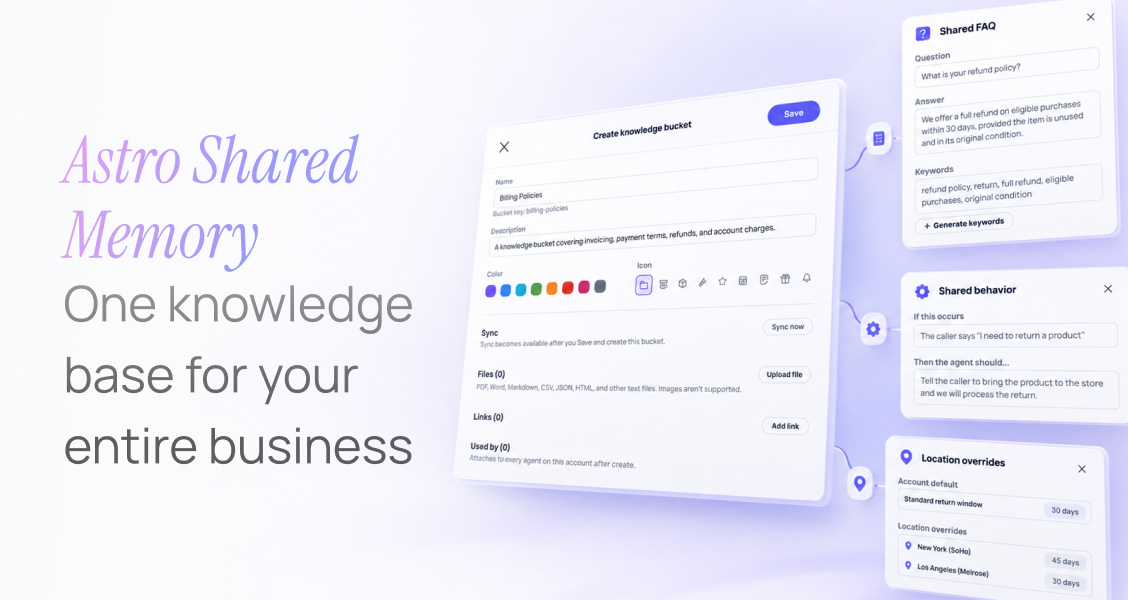
That knowledge serves both Voice AI and Chat AI, so your business runs on one knowledge base instead of a separate one for every customer touchpoint. Account-wide information can be set once, while location-specific details can be overridden where needed.
The customer calling your store and the customer chatting on your website get answers grounded in the same business knowledge.
One business. One knowledge base. Every store and channel working from the same understanding.
Bring the information you already have
Building an AI knowledge base should be a matter of pointing at what you already wrote.
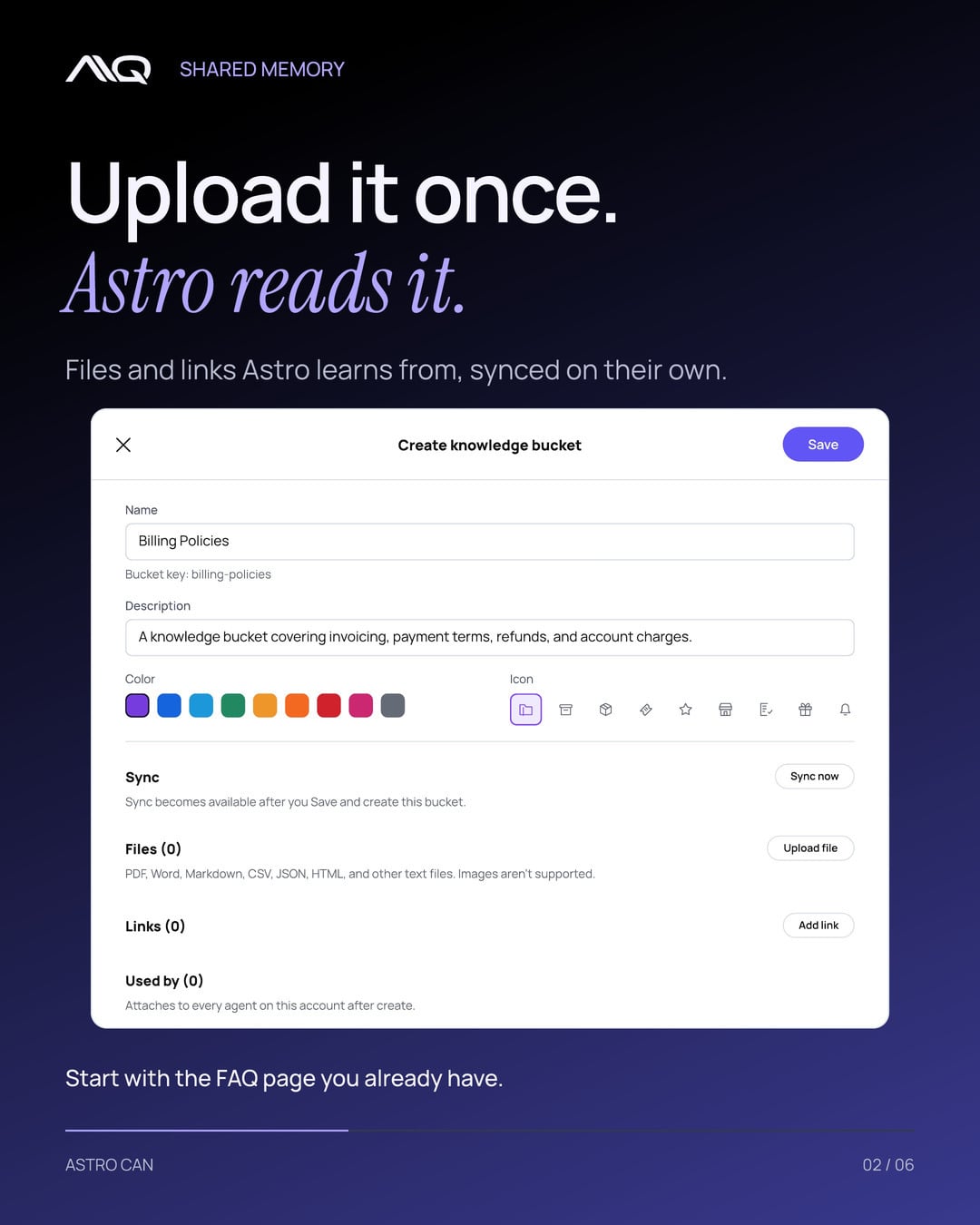
With Shared Memory, Knowledge Buckets let you upload files and links Astro can reference. Start with the FAQ page already on your website. Add policies, program documentation, menus, product information, internal resources, or other materials Astro should know.
Knowledge Buckets sync automatically, and your team can trigger a sync manually when you want new information picked up immediately.
Your existing information becomes usable context for Astro, without anyone on your team repeatedly explaining the same business rules.
Upload it once. Astro reads it.
Answer the questions your team gets every day
Not everything your employees know has been written into a document.
That is where Shared Memory FAQs come in.
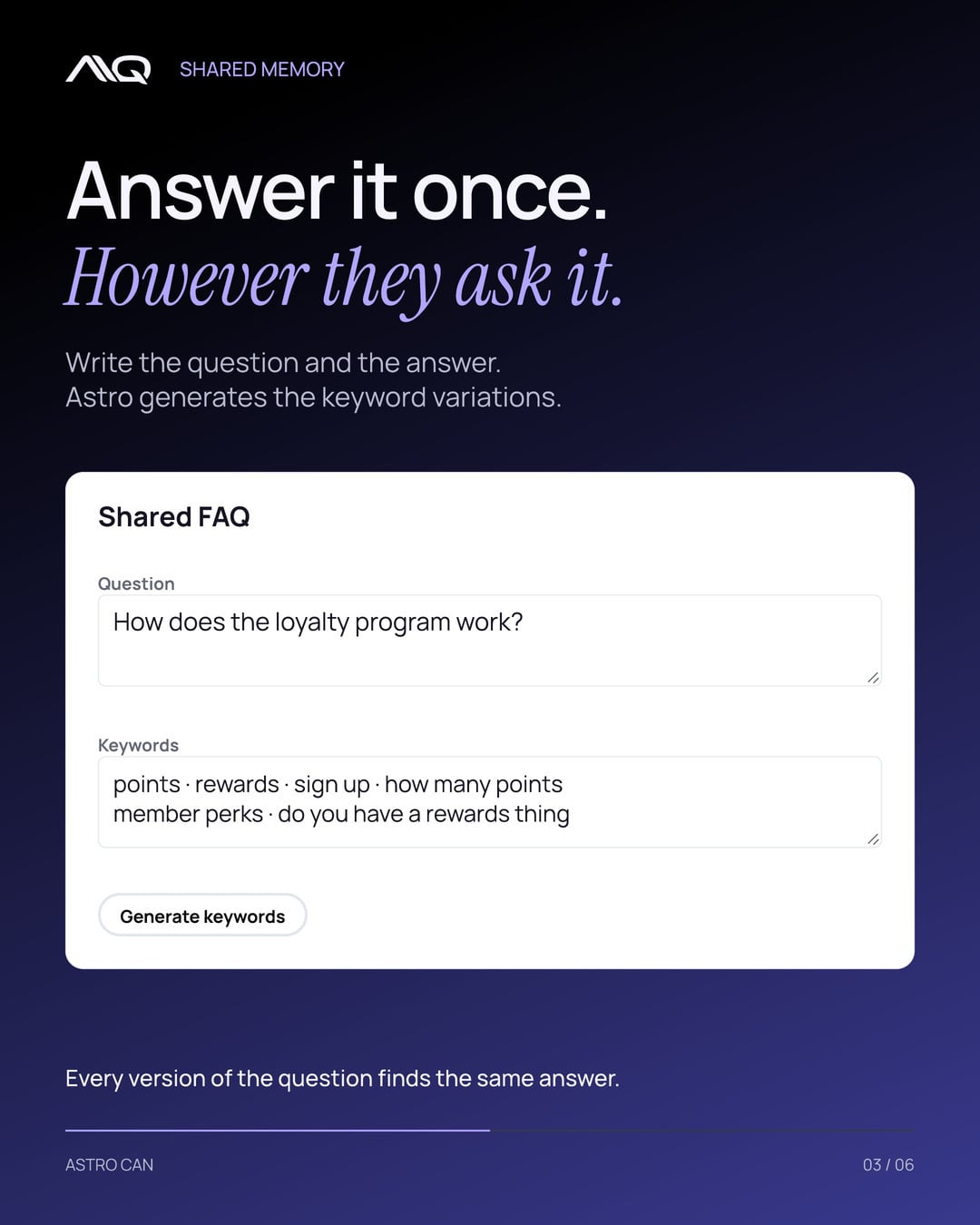
Add the question. Add the answer. Then give Astro keywords representing the different ways customers might ask it. Astro can also generate keyword variations for you.
"How does your loyalty program work?"
"How many points do I earn?"
"Do you guys have rewards?"
Different questions. Same answer.
FAQs give your team a place to capture the institutional knowledge that normally lives in someone's head, and make it available wherever Astro is helping your customers.
Your rules. Your tone. Every conversation.
Knowing the answer is only part of delivering a good customer experience. How you answer matters too.
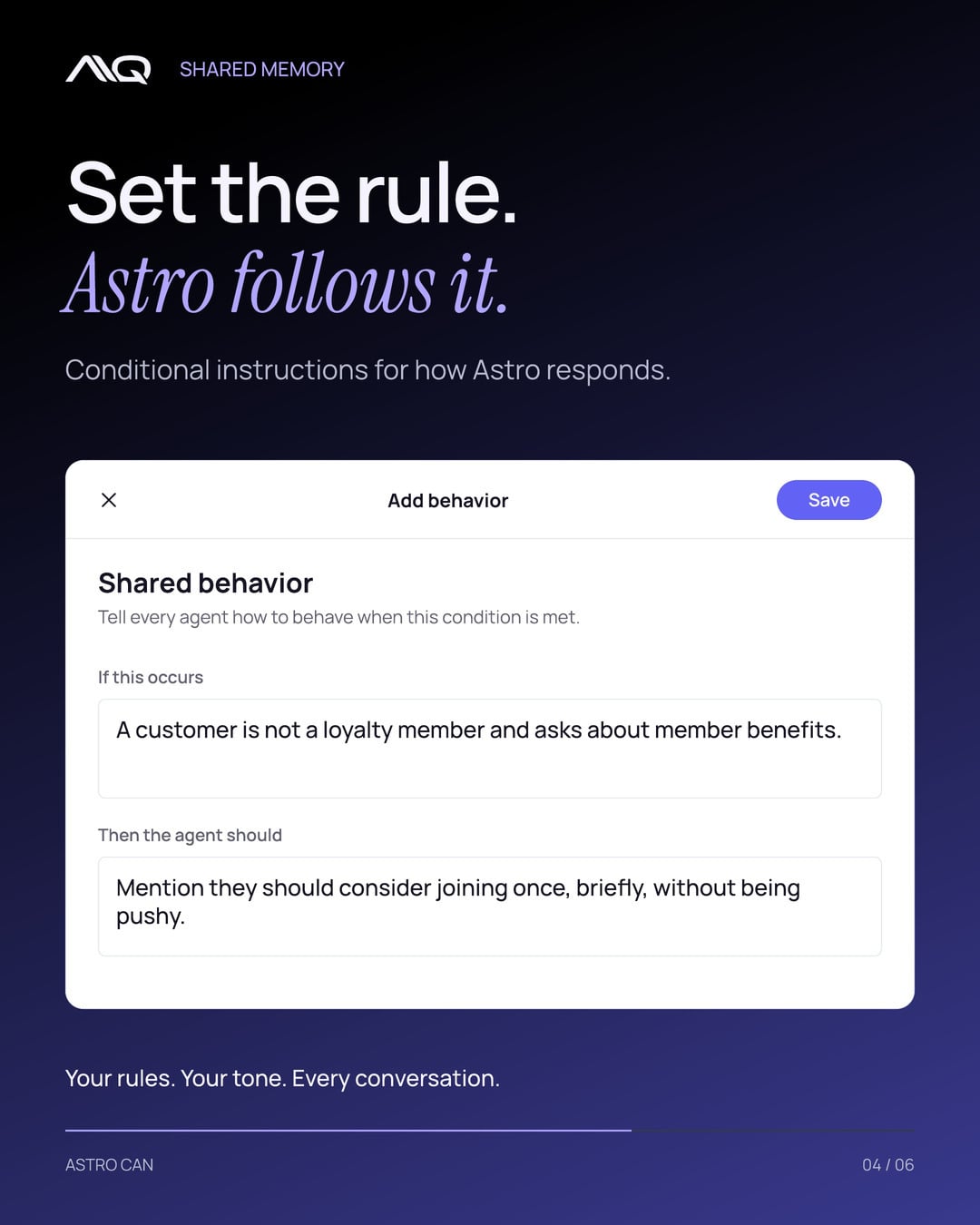
Shared Memory Behaviors let you define conditional instructions for how Astro should respond when specific situations occur.
If someone who is not a loyalty member asks about member benefits, Astro can briefly mention joining without turning the conversation into a hard sell. If a customer asks about an upcoming event, Astro can point them toward the right channel for updates. If someone asks about a payment method you do not accept, Astro can explain the alternatives.
You set the rule. Astro follows it.
Your policies, tone, and customer experience stay the same regardless of which location answers the question or which channel the customer happens to use. The behavior you define becomes part of how Astro represents your business.
Many stores. One knowledge base.
For multi-location retailers, consistency gets harder with every store you add. Shared Memory is built around that reality.
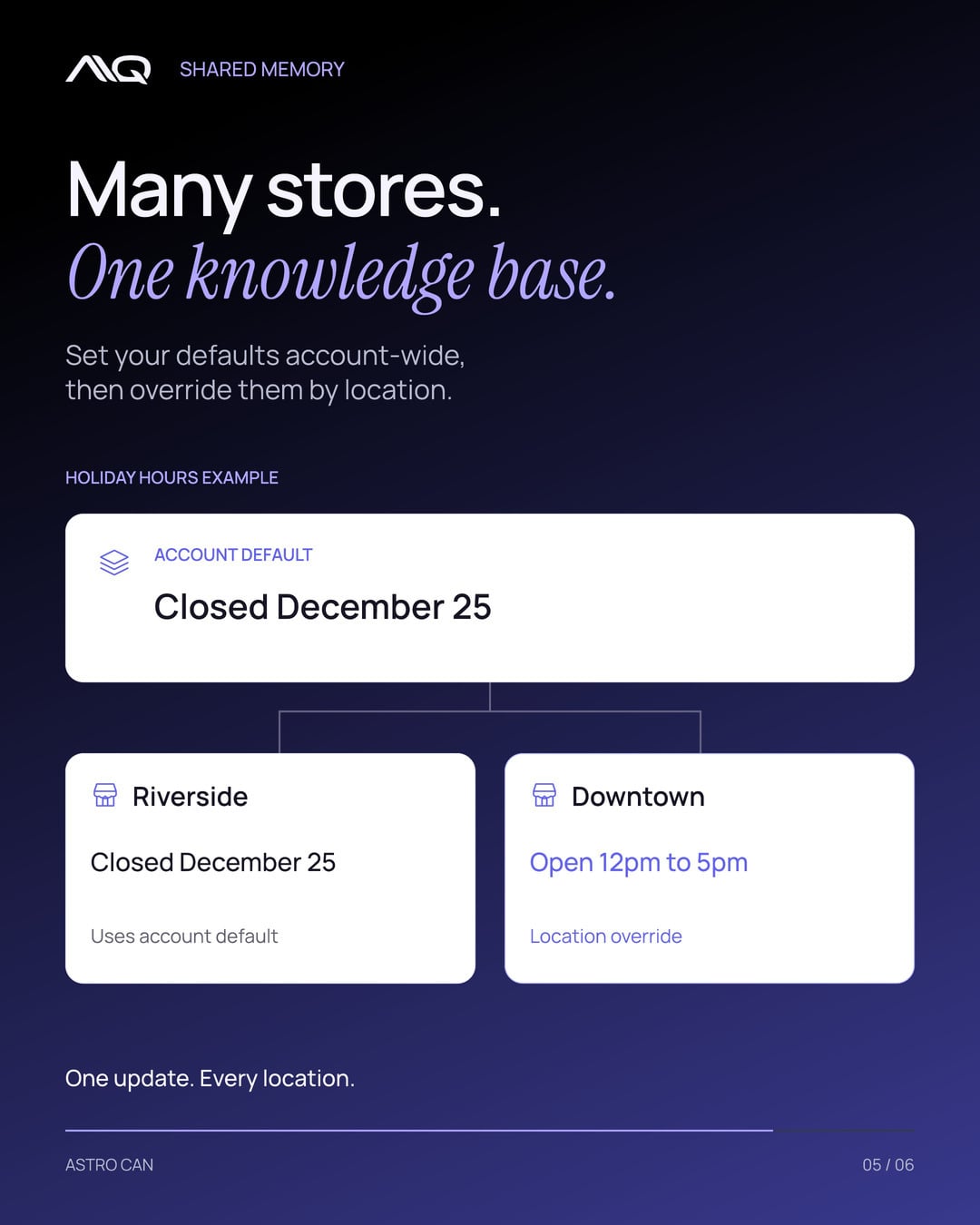
Set information at the account level when it applies everywhere. When something is different at a specific location, override it there instead.
Your loyalty program might work the same across fifteen locations, while pickup instructions differ at two. Your general policies might stay consistent, while one store follows different operating procedures.
You do not need fifteen separate knowledge bases. Set the default once. Override the exception.
When account-level information changes, every location using that default stays aligned without your team updating the same information store by store.
Give Astro what it cannot already know
Shared Memory becomes more useful when it stays focused.
Astro already has connected information it can access through AIQ, including orders, inventory, customers, and loyalty data.
So before adding something to Shared Memory, ask one question:
Can Astro already look this up live?
If the answer is yes, you can leave it alone. If the answer is no, Shared Memory is where that knowledge belongs.
The same applies inside Shared Memory itself. Rather than maintaining the same loyalty information in a Knowledge Bucket and an FAQ, choose one source of truth. AIQ recommends this approach to reduce the risk of conflicting or outdated information.
Give Astro one reliable place to learn each thing once.
Shared Memory gets more valuable as Astro works
This is where Shared Memory becomes more than an AI knowledge base.
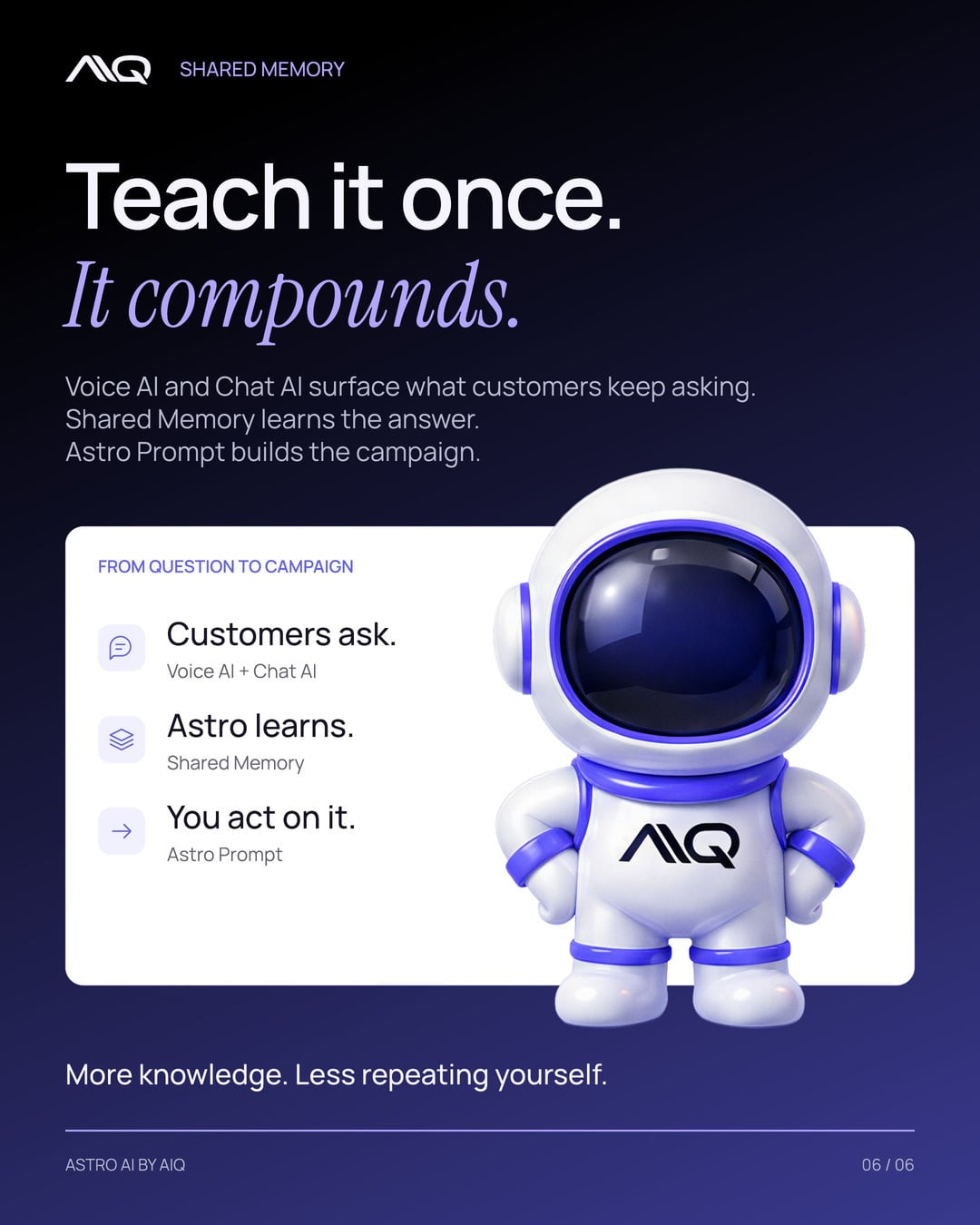
Voice AI and Chat AI interact directly with your customers. Those conversations reveal what people actually want to know, including the questions your business has never documented well.
That creates a feedback loop.
A repeated customer question can become something your team understands, documents, and eventually builds a campaign around.
The more useful knowledge you give Astro, the less time your team spends re-explaining how your business works.