×
New on the blog
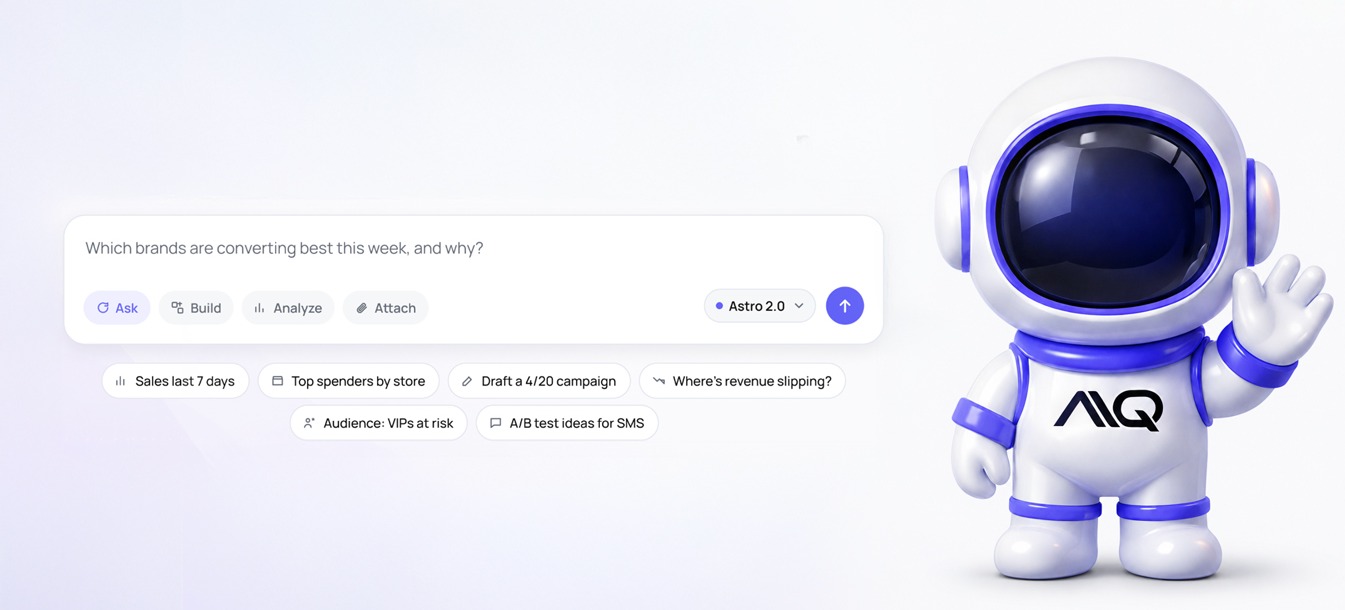
Meet Astro. The AI operating system for AIQ.
"Build me a 20% off campaign for lapsed customers." Astro can have it ready before you finish your coffee. You decide when it sends.
See what Astro can do →New on the blog
"Build me a 20% off campaign for lapsed customers." Astro can have it ready before you finish your coffee. You decide when it sends.
See what Astro can do →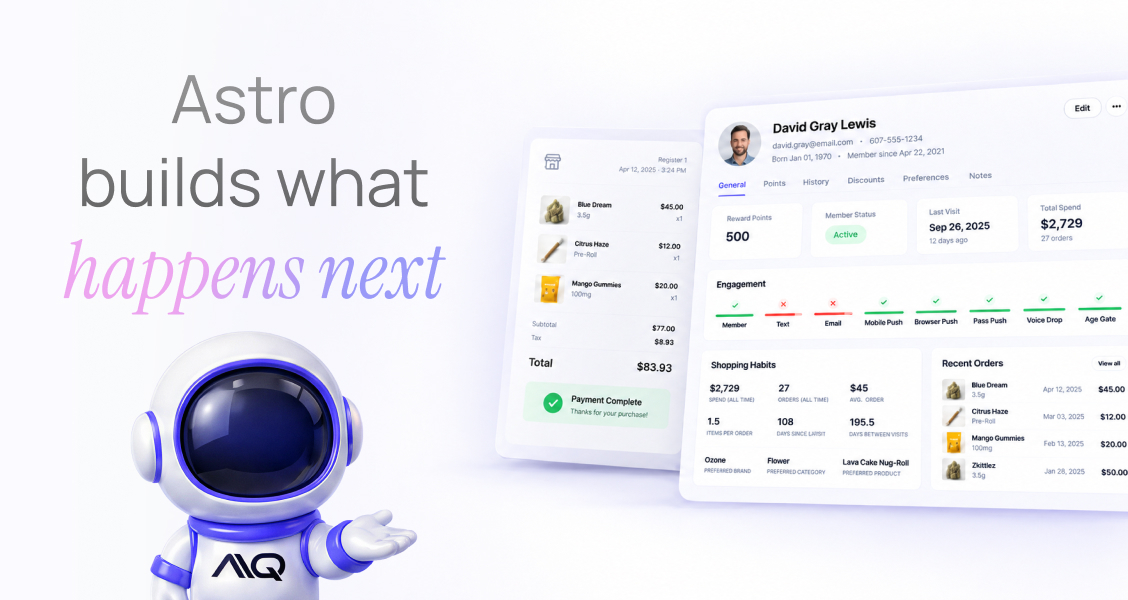
Operators keep asking us some version of the same question. If I already have a POS, and it already has an AI, why do I need another system holding customer data?
It's a reasonable thing to ask. You pay for a system that knows what sold, what's on the shelf, and what the state wants reported. Your staff lives in it all day. Paying for something that claims to know your customers can sound like paying twice for the same information.
The gap isn't where most people expect it to be, though. It shows up after the answer.
A POS is very good at its job. It captures the transaction. What got scanned, what it cost, who rang it up, what came off the shelf, what the state needs to see later. Your inventory and your compliance reporting both run on it, and nothing else in your building does that work better.
The transaction is a single moment, though. What led up to it happened somewhere else, and so did everything that came after.
If you ask your POS why a customer came back, it can tell you what they bought that day. It can't tell you what brought them in.
It wasn't there for the text you sent Tuesday morning, or for the customer opening it on their break. It didn't see them browsing the app that night, adding something to a cart and then closing the tab. It missed the push notification the next morning that put your store back in their head. It has no record of the review they left afterward, the friend they told, or the six quiet weeks before any of it started.
A customer profile worth having holds the whole relationship in one place, going back as far as the relationship goes.
The difference is easy to see in practice. One system can tell you that Marcus spent $340 with you last quarter. Another can tell you that Marcus reads his texts on Thursday evenings, buys the same live rosin every time it comes back in stock, has never once used a discount code you've sent him, and hasn't walked in for 41 days.
The first is a number you can put in a report. The second tells your team what to do about Marcus on Friday.
Getting to the second version takes more than a longer contact record. It takes every surface the customer touches feeding the same profile, and years of that happening before anyone asks a question of it.
Here's the part worth paying attention to as every platform in this industry ships an AI feature.
Nearly all of them are built to answer. Ask a question, get a chart. Ask another, get a table. Some will let you point ChatGPT or Claude at the data and query it from outside. That's useful, and if you've spent years waiting on exports it can feel like a transformation.
Then the answer arrives and the work starts. You still have to build the audience. Write the copy. Set the schedule. Pick the channel. Load it into whatever tool actually sends. The AI told you eleven customers are slipping. It did not do anything about the eleven customers.
An analytics layer makes you faster at knowing. It doesn't make you faster at doing, and doing is where the week goes.
There's a second problem underneath that one. An AI that only reads transaction records will still produce work when you ask it to. It will build a winback aimed at customers who aren't actually lapsed, because it has no idea what normal looks like for them. It will push a product to someone who tried it once in 2023 and never came near it again. None of that looks wrong on the screen, which is what makes it expensive.
Ask Astro which customers are slipping and you get the answer, the same as anywhere else.
Then you say: build the winback. Astro pulls the audience from purchase history, writes the copy in your brand voice from the assets already in AIQ, builds the email HTML, sets the flow and the timing, and hands the whole thing back for your review. One thread. No export, no second tool, no rebuilding the segment by hand because the chart couldn't send anything.
When the deal shifts on Wednesday, the rebuild is another prompt instead of another afternoon.
That's the difference between a system that reads your data and a system that runs on it. Astro is already inside the place where your campaigns live, your loyalty program runs, your customers get messaged, and your phone gets answered. The answer and the action are the same system, which is why one leads straight into the other.
Astro was built on top of customer data we've been accumulating for seven years.
625 million customer records, deduplicated into actual people rather than raw contacts, with purchase and engagement history attached to each one. 7,000+ store locations. Roughly 1 in 5 U.S. cannabis transactions running through the platform. $66 billion in lifetime GMV analyzed. 8.2 billion messages delivered, each with a record of what the customer did next.
When Astro tells you a segment is about to lapse, it's working from your own purchase history, going back as far as your account does. When it writes a text, it's working from what your customers have opened, clicked, and come in for.
That depth is also why the results are measurable at all. AIQ clients average $2.44 in revenue per text message sent, and you only get that number when the send and the sale end up in the same record. Loyalty members are worth 3.6x more over their lifetime and drive 56% of customer revenue. Points aren't what makes them valuable. Signing up is what lets you recognize them every time after.
A winback is only as good as its definition of "gone." Forty-five days without a visit means something completely different for a daily flower customer than for someone who picks up a cartridge every couple of months. With full purchase history behind it, Astro can tell those two people apart, then build the campaign for the ones who are actually gone.
When Voice AI answers the store phone, it knows who's calling, what they've bought, and what their points balance is. It can sign them up for loyalty on the call. And because that conversation lands in the same place as everything else, the person who called about a product and didn't buy is someone you can follow up with on Thursday.
And when someone does come back, you can see why. Which message, which channel, how long it took. Your POS recorded the sale. Astro has the rest of the trail that led to it.
AIQ integrates with Dutchie, Treez, Flowhub, Cova and most other systems operators are running. We pull transaction data in, deduplicate it against the profiles we already have, and attach it to everything else we know about that person. Your POS carries on doing what it's good at, and we'd rather it did.
What we're after is the context around the transaction. Why the visit happened, what nearly stopped it, what would have made the basket bigger. Your register moves on from that the moment the drawer closes, and it should, because holding onto it was never its job. It's ours.
Including us. Three questions will tell you most of what you need to know.
How far back does it look when it decides? Not how long the company has existed, and not how much data they hold in total. Ask what window the AI actually reads when it builds a segment or picks a send. Then ask how much of your own history is in there, since a platform you joined last year has last year regardless of how long they've been in business.
What can it see besides purchases? Ask specifically about message opens, app sessions, abandoned carts, phone calls and loyalty redemptions. Plenty of systems can only read what rang up at the counter.
Can it act on the answer, or does it hand me a chart? This is the one that separates an analytics layer from an operating system. Ask the rep to have it build the campaign, not describe one. Watch whether the audience, the copy, and the flow come back, or whether you're expected to go build them somewhere else.
Can it show its work? Ask what data it used for each choice it made, and who on your team would be on the record for the send. A platform that acts on your customers should be able to tell you why it did, and stop when you say so.
Every platform will tell you who's slipping away.
Ask yours what it did about it.