×
New on the blog
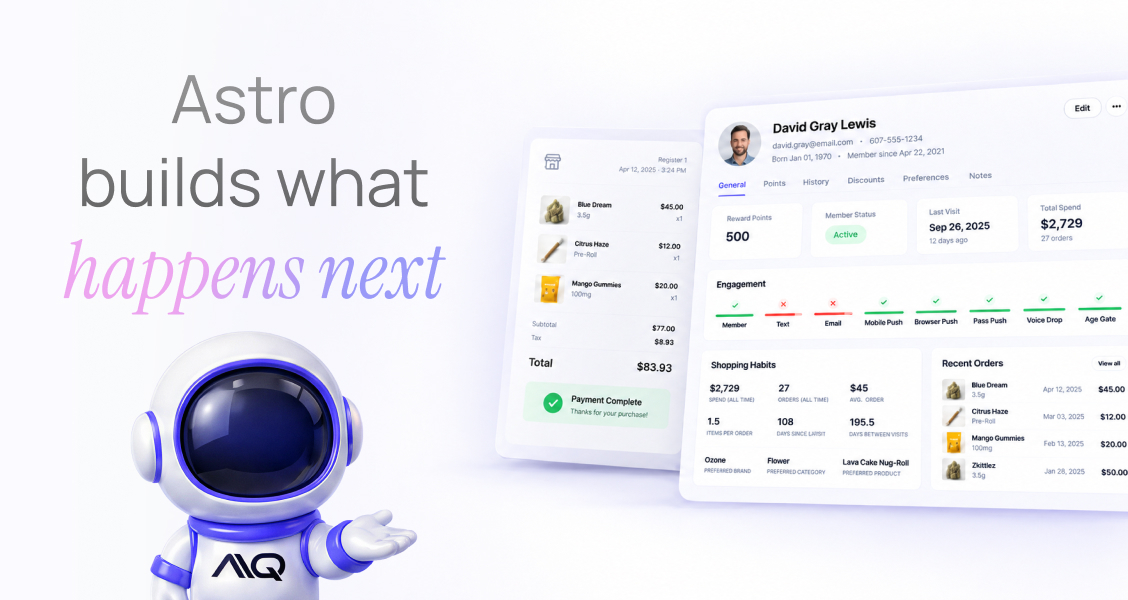
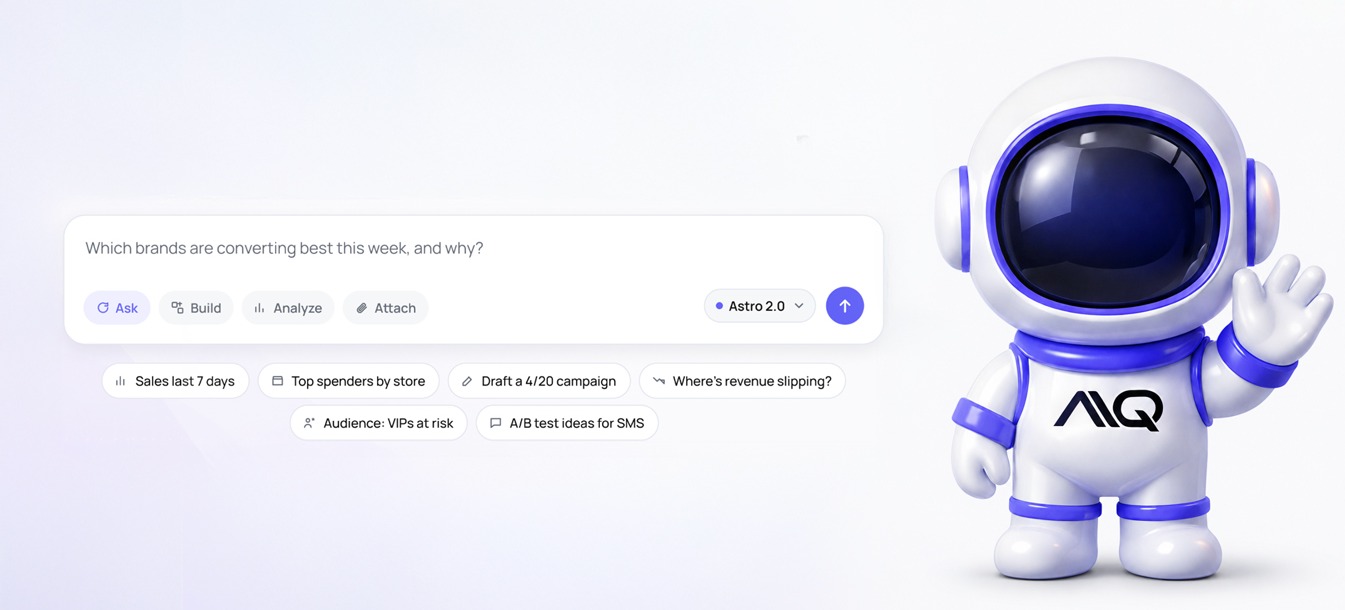
Meet Astro. The AI operating system for AIQ.
"Build me a 20% off campaign for lapsed customers." Astro can have it ready before you finish your coffee. You decide when it sends.
See what Astro can do →New on the blog
"Build me a 20% off campaign for lapsed customers." Astro can have it ready before you finish your coffee. You decide when it sends.
See what Astro can do →
Every POS demo covers the same ground. Speed at the counter, inventory, compliance reporting, how the receipts look, what happens when Metrc goes down.
Almost nobody asks whether the system will let them connect anything else to it. It feels like an IT question, and you are there to buy a register.
It is the question that decides the most, because the answer governs every other software decision you make for as long as you run that system.
Strip out the technical language and it comes down to one thing. Can a tool you choose read from and write to your own data without the vendor's permission as a gate.
An open platform publishes an API, documents it, and lets third parties build against it. You can plug in a marketing platform, a loyalty program, an ecommerce front end, an analytics tool, a brand partner's reporting. The vendor does not have to like your choice for it to work.
A closed platform keeps that access internal. Sometimes there is no public API. Sometimes there is one, available only to partners the vendor approves, which is a different thing wearing the same word.
The practical difference shows up the first time you want to run something the vendor does not sell.
Worth being fair about this, because the reflex is to treat closed as lazy engineering.
It is not. Building and maintaining a public API is real work and real support burden, and a vendor who keeps the stack closed gets a genuinely tidier product. Everything matches. Nothing breaks because somebody else shipped a change. Support is simpler when there is only one system to look at.
That tidiness is also the sales pitch, and it is a reasonable one. Fewer vendors, one bill, one support line, everything connected out of the box. For a single store with no marketing hire, there is a real argument for it.
What the pitch tends to leave unsaid is the other half of the trade.
The cost rarely shows up at signing. It shows up eighteen months later, in a meeting about something else entirely.
Each of those is a small problem with an easy answer on an open stack. On a closed one, the answer is a support ticket and a feature request, and you find out that your options narrowed at a moment you were not paying attention to.
There is a compounding version of it too. Every month you run on a closed system, more of your operating history accumulates somewhere you cannot reach with tools of your own choosing. The data is still yours in the contractual sense. What you can do with it is set by someone else.
Five questions, and you want them answered in writing.
If a rep cannot answer these in the room, that is still an answer. The ones with open platforms tend to enjoy this conversation.
We publish what each integration supports: loyalty signup, redemption and status at the register, plus ecommerce. Twelve systems, side by side.
We built on the assumption that operators should get to choose. AIQ integrates with Dutchie, Treez, Flowhub, Cova and most other systems running in cannabis retail today, and the work on our side is the same whichever one you run.
Where we cannot go is where the door is closed from the other side. Some platforms do not permit outside connection at all, and no amount of engineering on our end changes that. If you are running one of those, we are not going to pretend otherwise, and you should know that before you evaluate us rather than after.
That is also why we think the question is worth asking early. We would rather lose a deal to a stack decision you made with full information than win one that falls apart when you find out what you cannot connect.
A point of sale decision looks like a decision about a point of sale. For the length of that contract, it is also a decision about your marketing platform, your loyalty program, your ecommerce, your analytics, and anything a brand partner might want to measure.
Open or closed is the setting that determines whether those stay your decisions.
Worth one question in the demo.
Our field guide covers what carries over when the register changes, and which loyalty steps your team can complete at the counter on each system. Twelve POS platforms mapped.