×
New on the blog
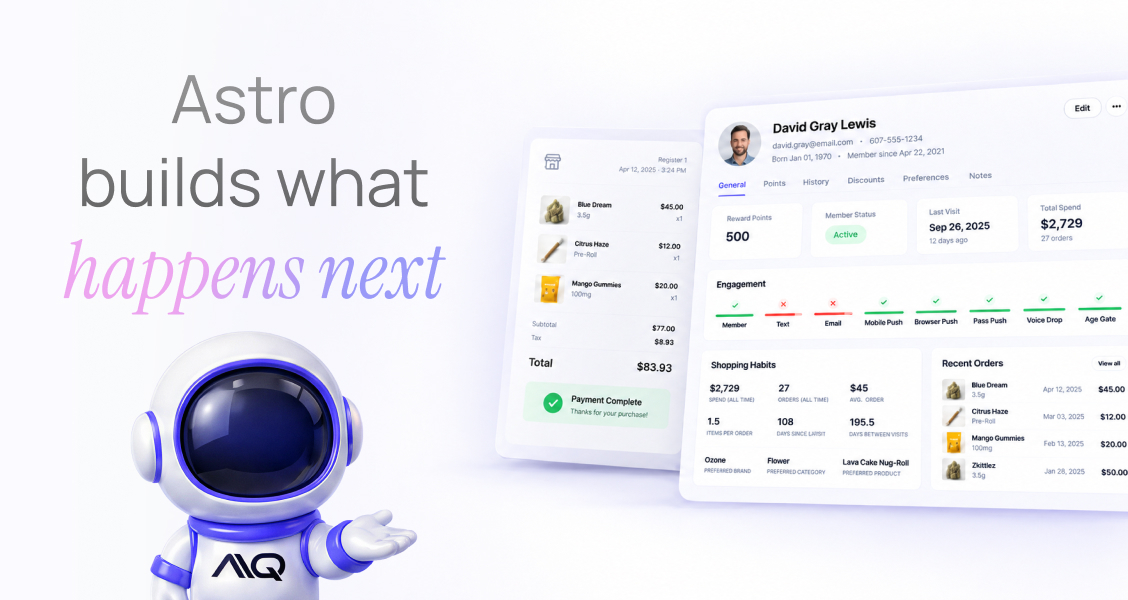
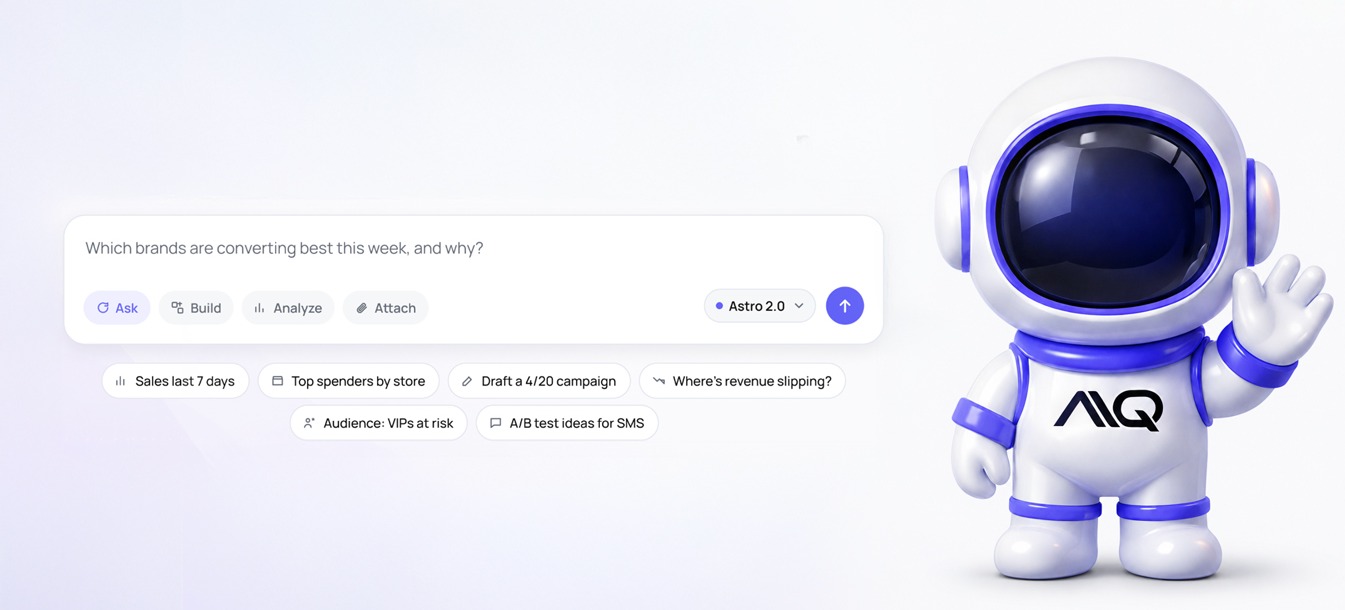
Meet Astro. The AI operating system for AIQ.
"Build me a 20% off campaign for lapsed customers." Astro can have it ready before you finish your coffee. You decide when it sends.
See what Astro can do →New on the blog
"Build me a 20% off campaign for lapsed customers." Astro can have it ready before you finish your coffee. You decide when it sends.
See what Astro can do →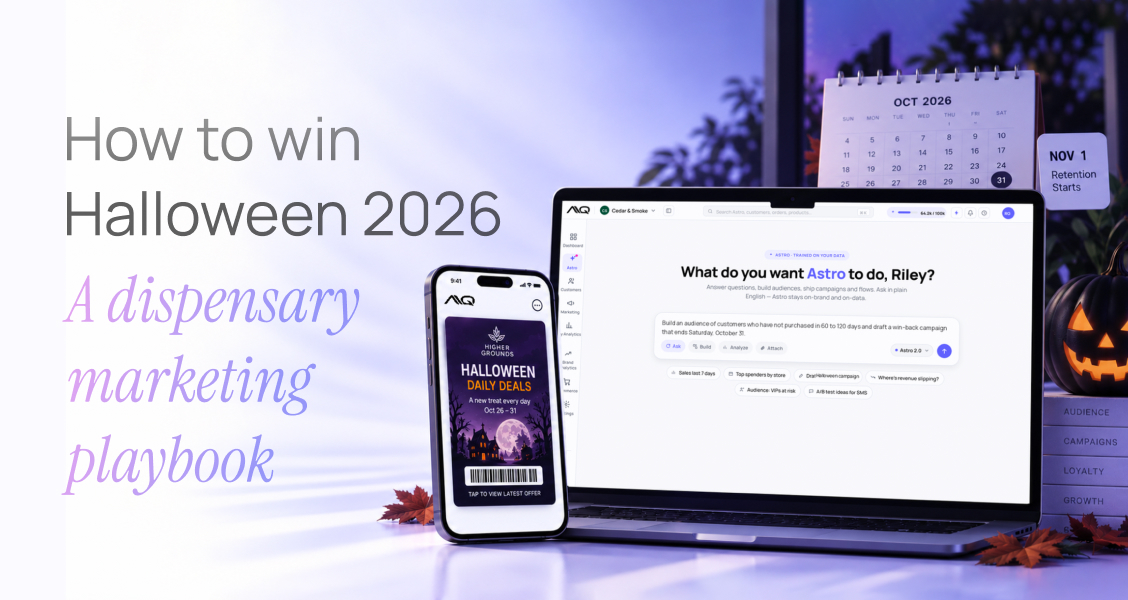
Most Halloween promotions get built the week of, and that is the problem. A storewide discount posted on October 29 reaches whoever happens to be looking, converts customers who were already coming in, and leaves the store with a busy Saturday and nothing to show for it in November.
This year gives you two reasons to plan earlier. Halloween is Saturday, October 31, so your biggest October traffic lands on a weekend night instead of a weekday evening. Daylight saving ends the next morning, Sunday, November 1, which changes your send times and your delivery windows going into the rest of the quarter.
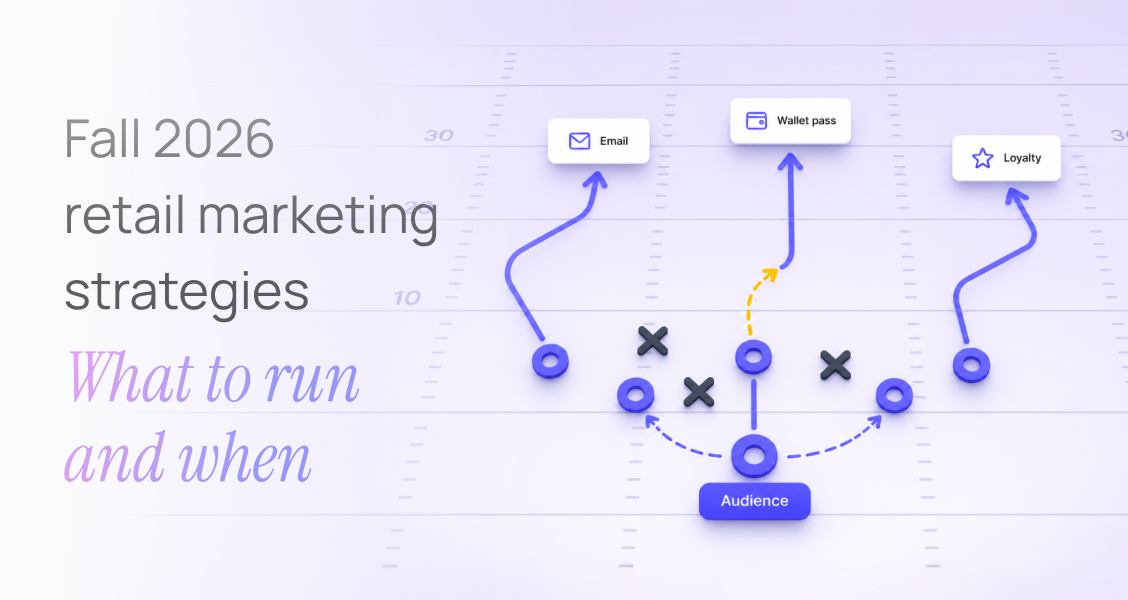
You have four weeks. What follows is a timeline for the time you actually have left, then ten plays you can build in AIQ. Our fall 2026 retail marketing strategies post covers the full season. This one goes deep on the last week of October.
Halloween brings two different shoppers through the door. One is stocking up for a party and buying for a group. The other is staying home and buying for themselves. A single message treats them as the same person and underperforms with both.
In AIQ, use Persona CRM and audience segmentation to split your list on average order value and purchase pattern rather than category alone. Ask Astro Prompt to build both audiences from purchase history, then review the drafts before anything goes live. For a creative angle, write the group audience around sharing and the solo audience around a specific effect, and let the same promotion carry two different messages.
Measure click rate by segment against last October's single send.
A message that opens with what the customer has already earned reads as personal and costs nothing against today's margin. A percentage off reads as a discount available to anyone. Most Halloween sends lead with the percentage and bury the balance, which is backwards.
In AIQ, build the send so the points balance appears first and the offer supports it. Ask Astro Prompt to draft the campaign with the balance leading, then check the copy before approving.
Measure redemption rate on the balance-led send against a percentage-led send to a similar audience.
A wallet pass sits on the phone and can be updated in place without asking for another opt-in and without spending a send. That makes it the cheapest channel you have during a week when every other channel is crowded.
In AIQ, distribute passes now and update the offer inside them through Halloween week, with something different revealed each day from Monday to Saturday. For a creative angle, keep the Saturday reveal hidden until that morning so the pass gives people a reason to look. Customers who do not open email and screen their texts still see it.
Measure pass open rate across the reveal week and purchases from pass holders.
Your menu, loyalty dashboard, and ecommerce pages reach every customer already shopping with you, and most stores leave that space empty during their busiest week.
In AIQ, use Loops self-serve placements to run your own Halloween creative across those surfaces, targeted by location, customer interest, or time of day. Brand-funded placements work here too, so a partner can pay for the visibility while the click comes back to your own menu. Run a different placement for daytime and evening traffic during Halloween week.
Measure placement clicks and purchases attributed to Loops during October.
The fastest way to give away margin during Halloween week is to send a discount to someone who bought yesterday at full price. Most stores skip this step because it takes a few minutes and nobody notices the money it saves.
In AIQ, exclude anyone who has purchased in the last few days from each Halloween send. Ask Astro Prompt to build the audience with that exclusion, and confirm the suppression window before you approve it.
Measure the share of Halloween week revenue that came through a discount, against last year.
Halloween gives a customer who stopped coming in a reason to come back, and a Saturday deadline makes the offer feel real. Reactivating someone who already knows your store is worth more than finding a new face, since loyalty members carry 3.6x the lifetime value of non-members.
In AIQ, ask Astro Prompt to build an audience of customers who have not purchased in 60 to 120 days and draft a win-back campaign ending Saturday, October 31. Send it early in Halloween week so it does not land in Friday noise. Customers gone longer than 120 days need a different message, so keep them separate.
Measure reactivation rate within the campaign window.
Plenty of customers are a short distance from a reward they have no idea they are near. Halloween week is a natural moment to tell them, since they are already planning a purchase.
If your program uses tiers, build an audience of members sitting just under a threshold and send a message that names how close they are. For a creative angle, pair it with a tier-only perk that lands in November, so the upgrade pays off after Halloween and gives them a reason to return. If your program does not use tiers, run the same play on points balance: find customers holding enough points to be within reach of your next reward and tell them what that balance already unlocks.
In AIQ, ask Astro Prompt to build whichever audience fits your program, and confirm the threshold logic before launch.
Measure tier upgrades during October against a typical month, or reward redemption rate among the points-threshold audience.
Birthday messages already get opened. In October, add a Halloween bonus on top of the standard birthday reward so the visit does double duty. Loyalty anniversaries work the same way and almost nobody uses them.
In AIQ, add the bonus to your October birthday campaign. Anniversary triggers by signup date may need a separate setup. You can also add a birthday behavior in Shared Memory so Voice AI greets birthday callers by name when they phone the store.
Measure birthday reward redemption in October against a typical month.
A Saturday Halloween means call volume lands when your staff is already serving a full floor. Every call about hours is a budtender pulled away from a customer standing in front of them.
In AIQ, load your Halloween hours, pre-order cutoff, and pickup instructions into Shared Memory this week, then create a Voice AI agent and connect it to those knowledge buckets. The agent answers the phone with what you loaded, checks a verified caller's points balance, and can walk a non-member through loyalty signup on the same call. It will not place orders or redeem rewards, so keep a path to a person for anything beyond a question. Check the analytics mid-week and watch the knowledge gap rate, which tells you what callers are asking that the agent cannot answer yet.
Measure calls resolved by Voice AI during Halloween week and loyalty signups captured by phone.
Everyone who shopped Halloween week is at their most reachable in the days right after, and Green Wednesday arrives November 25. A Flow that starts November 1 turns a one-time Halloween shopper into a second visit before the Thanksgiving rush.
In AIQ, ask Astro Prompt to build a Flow for customers who purchased between October 26 and October 31: a thank-you on November 1, a points balance reminder a week later, and an offer before November 25. Build it now while you have time, and schedule evening steps with the earlier sunset in mind.
Measure repeat visit rate within 30 days for Halloween week purchasers.
Halloween night is still on daylight time, so Saturday itself behaves like a normal late-October weekend. The change arrives Sunday. Starting November 1, sunset lands about an hour earlier, and an evening text that used to arrive in daylight now lands after dark when most people are home for the night.
Two adjustments follow. During Halloween week, weight your sends toward Thursday and Friday so customers plan before Saturday fills up. From November 1, move evening sends earlier and test the new window for two weeks before locking it in. You have less room than you might think: AIQ enforces an 8 a.m. to 8 p.m. send window in the recipient's local time by default, which is tighter than the legal outer limit most people cite. There is no state-by-state override in the platform, so if your state is stricter than that, set a narrower window manually on the campaign or audience. Check your delivery hour limits separately
Everything Astro Prompt creates is a draft. Nothing sends until you approve it, so read each output before launching.
Advertising rules vary by state, so check yours before anything goes out. Keep Halloween creative clearly adult. Avoid imagery, characters, or packaging styles that could appeal to minors, and stay away from candy and cartoon visuals that resemble children's products. Autumn and night-themed creative gives you room to work with less risk than costume-and-candy imagery. If you run an in-store promotion, keep it inside your licensed premises and limited to verified adults.
Four numbers tell the story. Redemption rate shows whether your offers gave customers something worth using. Repeat visit rate within 30 days shows whether Halloween shoppers came back before Thanksgiving. Category attach rate shows whether your promotions pulled people into products they were not already buying. Lapsed-customer reactivation shows whether the win-back reached people you had lost.
Pull all four on November 30 and compare them with last October. That comparison tells you which plays to keep for Green Wednesday and which to retire.
Halloween is one date on a long quarter. Download 10 plays to run before the register gets busy for the rest of it, from Green Wednesday through New Year’s Eve, with a run sheet for the full season.