×
New on the blog
Meet Astro. The AI operating system for AIQ.
"Build me a 20% off campaign for lapsed customers." Astro can have it ready before you finish your coffee. You decide when it sends.
See what Astro can do →New on the blog
"Build me a 20% off campaign for lapsed customers." Astro can have it ready before you finish your coffee. You decide when it sends.
See what Astro can do →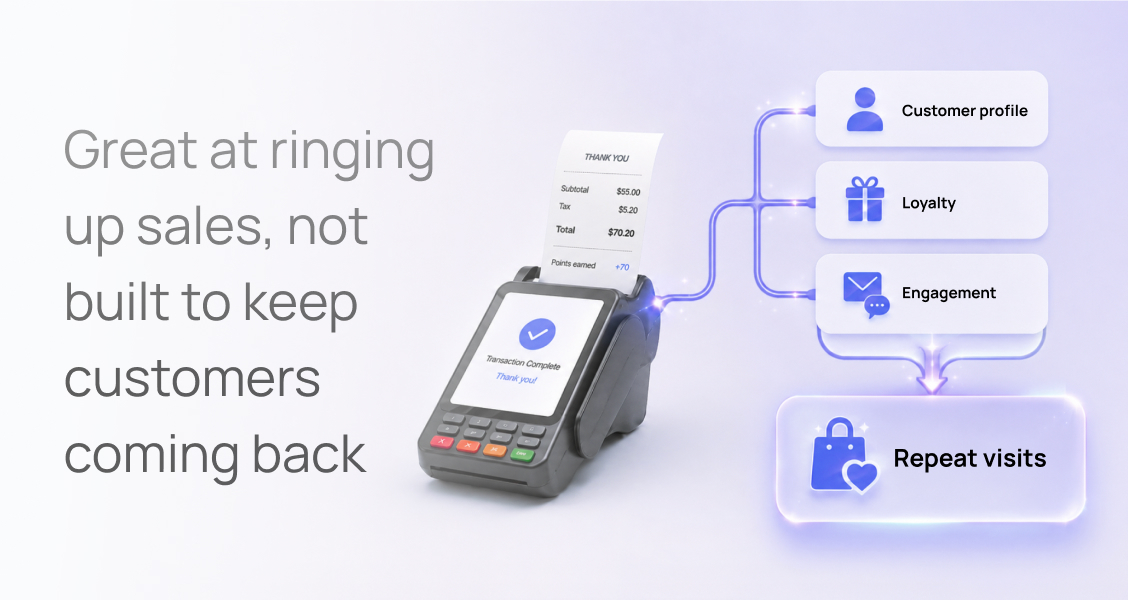
Every dispensary point-of-sale system was built to solve one problem well. It needs to get a customer through checkout quickly, accurately, and in a way that satisfies state compliance requirements. That's a hard problem, and the platforms leading cannabis retail today have gotten genuinely good at solving it. Inventory tracking, tax calculation, ID verification, and transaction processing run quietly in the background so a budtender can focus on the person standing in front of them instead of the software underneath.
None of that has much to do with turning a first-time buyer into someone who comes back next month, and the month after that.
Loyalty and retention pose a different kind of problem. Understanding who a customer is across visits calls for more than a single transaction record, and reaching that customer with a relevant message depends on their purchase history rather than a blanket promotion sent to the whole list. Getting there depends on data moving easily between the systems that talk to customers, build audiences, and measure results, and a platform built around the counter transaction was never designed with that kind of movement in mind, because that wasn't the job it was hired to do.
Retailers often feel this before they can name it. Maybe the loyalty program technically exists but drives a fraction of the revenue it should, or customer records sit inside the POS and resist syncing out to whatever marketing tools the retailer actually wants to run. The system isn't broken so much as retrofitted, with retention bolted onto a checkout tool after the fact rather than serving as the reason the tool was built in the first place.
Most retailers already have some version of a loyalty feature sitting inside their POS, which makes it easy to assume the box is checked. In practice a loyalty tab built into a checkout system can award points on a purchase, but asking that same tab to segment a dormant customer or trigger a win-back message automatically is a much harder ask, and handing a marketing team clean data on which offer actually moved the needle is harder still. Those capabilities take infrastructure built specifically around the customer relationship rather than a feature bolted onto a system whose real job is processing the sale in front of it.
The gap shows up in the numbers. Across the AIQ network, loyalty members carry 3.6 times the lifetime value of non-members and purchase 11% more frequently. They also account for 56% of total revenue, a figure that reflects what happens when a customer relationship gets actively managed instead of left to a point-of-sale add-on. Those numbers come from a platform built specifically to understand a customer across every visit and channel, then act on that understanding without a marketing team manually stitching the picture together.
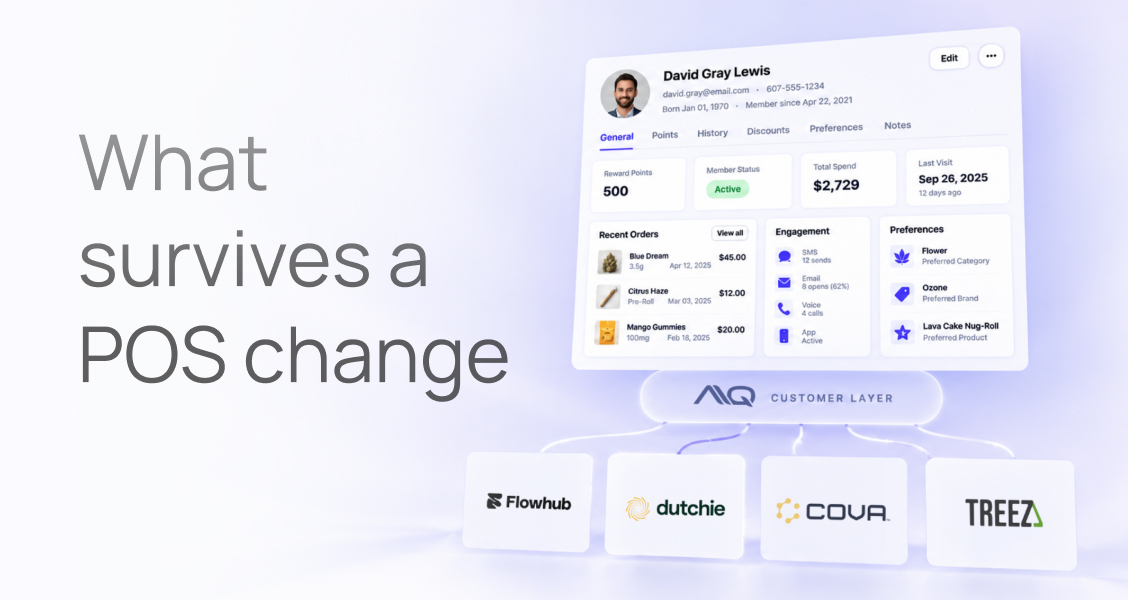
A retailer's customer data should move freely between the systems they've chosen to run their business, without a workaround and without someone remembering to run a manual export before a campaign goes out. AIQ integrates with 86+ platforms across the cannabis retail stack, and that number reflects a broader philosophy about who the data actually belongs to. The retailer collected it, so it should go wherever that retailer needs it to go.
This matters most in the moments retailers notice least, until they need something the POS wasn't built to give them, whether that's a segment that has to reach a specific channel quickly or a customer record that needs to travel with the retailer if they ever switch systems down the line. Being able to explain in plain terms which marketing dollar actually earned its keep matters just as much, and it depends on a platform designed for that kind of visibility from the start rather than a workaround stitched together after the fact.
POS platforms deserve real credit for doing what they do well. Checkout, compliance, inventory, and tax reporting are real problems that deserve dedicated infrastructure, and a good POS earns its place for exactly that reason. A retailer needs both a system that runs the counter and a system that runs retention, and asking one tool to handle both usually means the second job gets treated as an afterthought.
AIQ powers loyalty and marketing for more than 4,400 dispensary locations and holds profiles on over 85 million customers, and that focus on what happens after checkout rather than during it is what makes the specialization work.
If your current setup handles the sale well but leaves you guessing about what happens next, the fix is simpler than it might seem. Keep the POS doing what it already does well, and add the layer built specifically for what happens after checkout.
See what a loyalty platform built specifically for retention looks like. Talk to AIQ today