Green Wednesday and Black Friday 2026: What Happens After Matters More
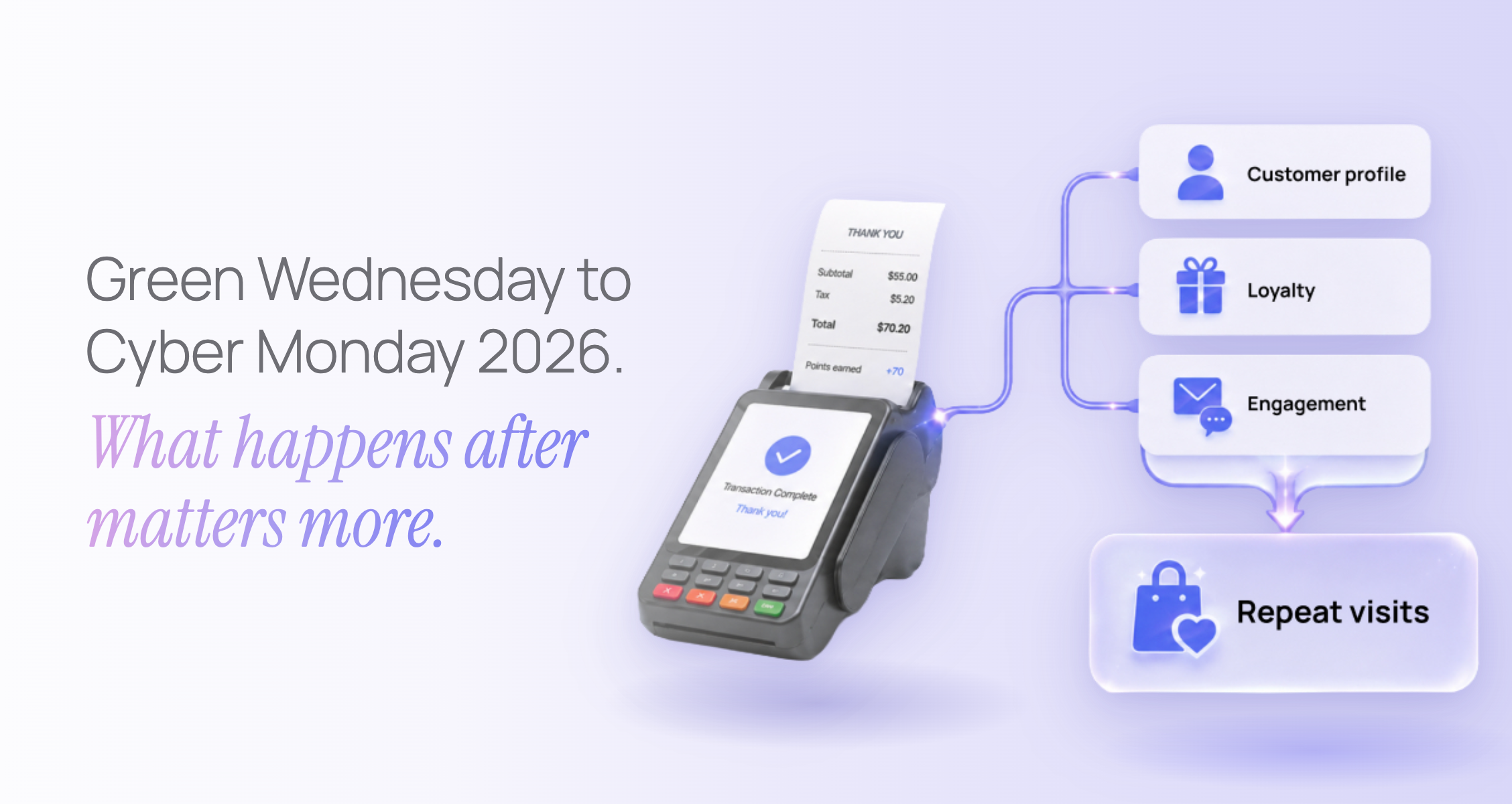
Thanksgiving week is an acquisition event wearing a sales event's clothes
Green Wednesday 2025 moved $113.5M, roughly 1.7 times an average day, and Black Friday followed at $107.5M. Dutchie recorded average dispensary sales up 91% against a typical Wednesday, with baskets up 9% to $70.80.
Those numbers get quoted every November as proof the week is worth running hard, which is also why it is worth running carefully. Volume that size at a discount that deep makes this the most expensive customer acquisition most dispensaries do all year. Retail gross margins have already slid from 52.6% in 2021 to 42.7% in 2025, so there is less room in the week than there was the last time you ran it.
Here is the part that gets skipped. The money you give away between November 25 and November 30 buys you something specific: a pile of new and reactivated customers who have now shopped with you once, at your lowest price of the year. Whether that was a good trade is not decided during the weekend. It gets decided in the two weeks after, when you either earn a second visit at full price or you don't.
Most Thanksgiving week content stops at the weekend, so this one keeps going past it. Our fall 2026 retail marketing strategies post maps the whole season. This is the Thanksgiving window in detail, in three acts.
Act 1: November 13 to 24
1. Score your list by discount dependency
What it is. Some customers buy from you only when something is on promotion. Others buy at full price all year. Sending both the same 25% off means paying the second group to do what they were going to do anyway.
Why it works. The deal-dependent group needs the discount to move. The full-price group needs a reason to come in, which a points multiplier or early access can supply without touching shelf price. Splitting them is the single highest-leverage thing you can do before the 25th.
How to build it in AIQ. Use Persona CRM and audience segmentation on the purchase history you already have. If your promotion history is tagged consistently, you can approximate discount dependency by the share of a customer's past orders that carried a promo. Average order value is the cleaner fallback, since Astro Prompt works from that trait directly.
Measure. Revenue per message by segment, compared against sending both the same offer last year.
2. Make the offer a threshold instead of a percentage
What it is. Replace "25% off" with "spend $100, get $25 in points."
Why it works. A percentage lowers your revenue per unit on everything in the basket. A threshold gives the customer a reason to add to the basket to reach it, and pays out in currency they have to return to spend. The perceived value is similar, while the effect on your average order runs the opposite direction.
How to build it in AIQ. Set the threshold offer through loyalty and announce it in the campaign. Keep the number close enough to your current average basket that reaching it feels achievable. Points-modifier audiences still need to be locked in manually, so build this before the week gets busy.
Measure. Average order value for the threshold offer against the same week last year.
3. Set discount depth by category margin
What it is. Stop running one storewide percentage across a menu where margins vary by category.
Why it works. A flat number over-discounts your thin-margin categories and under-uses the room you have in the fat ones. Depth should follow margin. The categories where you have room can carry the headline offer, and the ones where you don't can ride along on points instead of price.
How to build it in AIQ. Run category-specific point multipliers through loyalty on the tight-margin categories, and keep real discounts on the categories that can absorb them. The customer sees a full promotional week either way.
Measure. Gross margin dollars for the week, not revenue.
4. Get the uncontested channels ready now
What it is. Everyone sends SMS during Thanksgiving week, and carrier scrutiny tightens exactly when volume spikes. Three places are not jammed: the wallet pass already sitting on your customer's phone, your own menu and loyalty dashboard, and your store phone.
Why it works. A wallet pass can be updated in place without another opt-in and without spending a send. Loops places promotions inside surfaces you already own and sends the click back to your own menu. The phone becomes a channel the moment someone is staffing it, which during Thanksgiving week nobody is.
How to build it in AIQ. Distribute wallet passes this week so there is something to update later. Set up Loops placements against your weekend calendar. For the phone, load your holiday hours and pre-order details into Shared Memory, then create a Voice AI agent and connect it to those buckets. Voice AI is not live by default, so this is a build task, not a switch. Test-call it before the 25th.
Measure. Pass open rate across the weekend, and calls resolved by the agent.
Act 2: November 25 to 30
Green Wednesday is the 25th, Thanksgiving the 26th, Black Friday the 27th, Small Business Saturday the 28th, and Cyber Monday the 30th.
5. Suppress everyone who already converted
What it is. Before each send in the sequence, exclude anyone who has already purchased at the opening offer.
Why it works. The fastest way to give away margin during the busiest week of the year is to send a deeper discount to someone who bought yesterday at the shallower one. Most stores skip this because it takes a few minutes and nobody notices the money it saves.
How to build it in AIQ. Build the escalation step to exclude purchasers from the earlier step. Clicked without buying is your highest-intent group and the only one that needs the deeper offer.
Measure. Share of weekend revenue that moved at the deepest discount tier.
6. Work the channels that aren't jammed
What it is. Run the weekend's offer changes through the wallet pass and your own menu, and let the phone carry the questions.
Why it works. Your SMS is competing with every other retailer in the customer's phone that week. The pass updates in place, the menu placement reaches people who are already shopping, and a caller who gets an answer in thirty seconds is a caller your budtenders never had to stop for.
How to build it in AIQ. Update the wallet pass as the offer moves through the weekend rather than sending a new message for each change. One note on timing: AIQ enforces an 8 a.m. to 8 p.m. send window in the recipient's local time by default, which is tighter than the outer legal limit. There is no state-by-state override, so if your state is stricter, narrow the window manually on the campaign.
Measure. Conversions attributed to pass updates and Loops placements during the weekend.
7. Ask what's moving while you can still change it
What it is. Check category performance mid-weekend instead of reading it the following week.
Why it works. Black Friday morning tells you something about Black Friday afternoon. A category that is outperforming can carry more inventory and more promotional weight for the back half of the weekend, and one that is dead can stop eating placement space.
How to build it in AIQ. Open Brand Analytics mid-weekend and set the date range to the weekend so far. That gives you current category numbers to shift inventory and promotional weight against. Data syncs periodically rather than instantly, so the last few hours will lag slightly, which is fine for a decision about the back half of the weekend. Astro Prompt can pull the same view as a chart if you would rather ask for it in plain English.
Measure. Whether you made at least one inventory or placement change based on live data rather than a post-weekend report.
Act 3: December 1 to 15
This is the half of the window almost nobody plans, and it is where the week gets decided.
By December 1 you are holding something valuable and perishable: a group of customers who have now shopped with you exactly once, at your lowest price of the year. Most marketing calendars go quiet here until the holiday push, and that gap is where the cohort goes cold. The discount that brought them in taught them one thing about your store, which is that you discount.
Recovery is possible later, and it is expensive. One AIQ retailer running six stores across Connecticut and Massachusetts recovered $464,032 from 66,000 lapsed loyalty members over six months of dedicated work. Winning this cohort back in the first two weeks costs considerably less than rebuilding a recovery program in June.
Loyalty members carry 3.6x the lifetime value of non-members and drive 56% of revenue across the AIQ network. A Thanksgiving weekend buyer who never comes back is a discounted transaction you paid acquisition costs for.
8. Treat December 1 as a start date
What it is. A sequence that begins the Monday after Cyber Monday, built before the weekend so it runs while you recover.
Why it works. The weekend cohort is at its most reachable in the first days after, when your store is still fresh in mind. Waiting until mid-December means competing with every holiday message in their inbox for attention you already paid for.
How to build it in AIQ. Build a Flow that triggers on purchases made between November 25 and November 30: a thank-you on December 1, a points balance reminder about a week later, and a full-price offer before the holiday rush. Lead with the balance rather than another discount. The point of this sequence is finding out whether they will come back without one.
Measure. Second-visit rate within 30 days for weekend first-time buyers.
9. Split the cohort by how much they spent
What it is. Not everyone who bought that weekend is the same customer. Separate the ones who spent near your promotional minimum from the ones who built a larger basket around it.
Why it works. A customer who came in, took the deal, and left at $45 is telling you something different from one who used the same promotion as the start of a $130 order. The larger-basket group is worth a real second-visit offer. The minimum-spend group came for the price, and the right next step is a lower-cost nudge rather than another deep discount.
How to build it in AIQ. Build two audiences from the weekend's purchase data using a spend threshold that sits a little above your promotional minimum, then run them through different branches of the December 1 Flow. Spend is the practical proxy here. Audience filters work on purchase history rather than the line items inside a single basket, so you cannot currently separate customers who bought only the discounted item from those who added something at full price in the same transaction.
Measure. Second-visit rate by spend band, so you learn which kind of weekend buyer is worth acquiring next year.
10. Judge the week on December 15, not November 30
What it is. Wait three weeks before deciding whether Thanksgiving week worked, and measure the full window rather than the weekend.
Why it works. The weekend number is always good, which is why it tells you so little. Pulling the same figures at the 20-day mark folds in the second visit, so a promotion that spiked on Black Friday and produced nothing afterward shows up as what it was. That is the version worth carrying into next year's planning.
How to build it in AIQ. Pull revenue, margin, and repeat-purchase figures for November 25 through December 15, and keep them next to last year's same window so you have a year-over-year comparison rather than a single number.
Measure. Revenue per acquired customer across the full window, against the same window last year.
11. The four numbers that tell you whether the week worked
Pull these on December 15 and keep them somewhere you will find them next November.
Gross margin dollars for the week. Revenue is the number everyone quotes in December, though margin is what actually pays for the quarter.
Second-visit rate for weekend first-time buyers. The acquisition test. If this is low, the week bought you transactions and not customers.
Revenue per acquired customer, this year against last. The efficiency test. If you spent more discount to earn the same customer, the week got more expensive.
Loyalty signups from the weekend, and what share are still active on December 15. Signups are easy to celebrate in November and worth re-checking in December.
Four Astro prompts for this window
Everything Astro Prompt creates is a draft. Nothing sends until you approve it. Each prompt below includes a concrete threshold, because without one Astro will stop and ask you for it.
What to do with the next 30 days
Thanksgiving week will be busy whether or not you plan it well. What you control is how much margin it costs, and whether the customers it brings in are still customers on December 15.
Build the segments and the holdout this week, then suppress and sequence through the weekend. Start the second-visit work on December 1 while the cohort is still warm, and read the numbers on the 15th before you decide what next year looks like.
If you want the rest of the quarter in one place, 10 plays to run before the register gets busy covers Croptober through New Year's Eve, with a printable run sheet for the full season. For the October build that leads into this one, see our Halloween playbook.
*A note on compliance: Promotional rules vary by state, so check yours before any of this goes out. Threshold offers, points multipliers, and loyalty-gated pricing are each treated differently depending on where you operate, and some states restrict discounting mechanics that are routine elsewhere.
See AIQ with your own data
Book a 30-minute demo and we will show you the audiences and campaigns hiding in your customer list.
Book a demo